
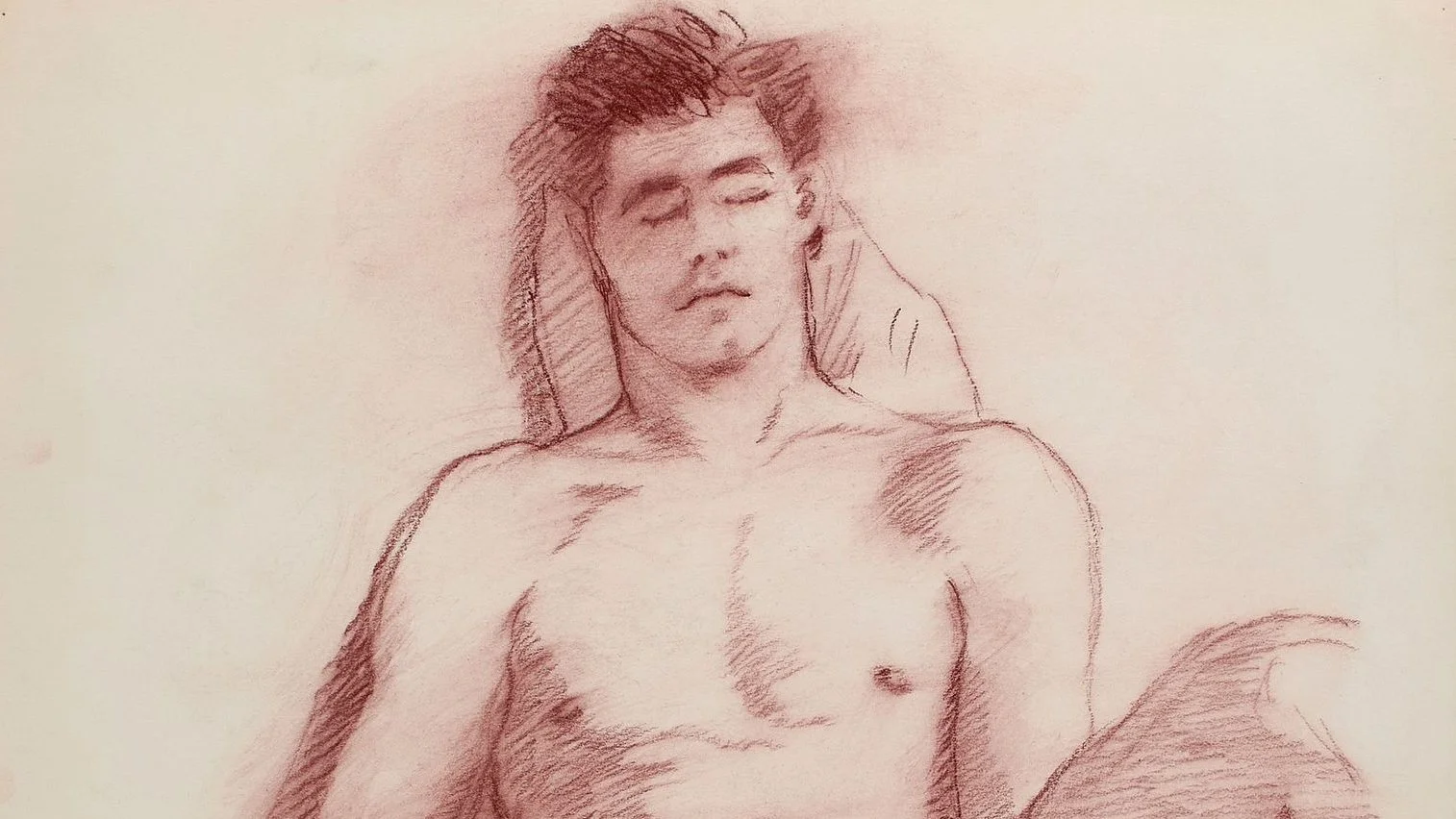
JOE BRAINARD
AMERICAN, 1942–1994
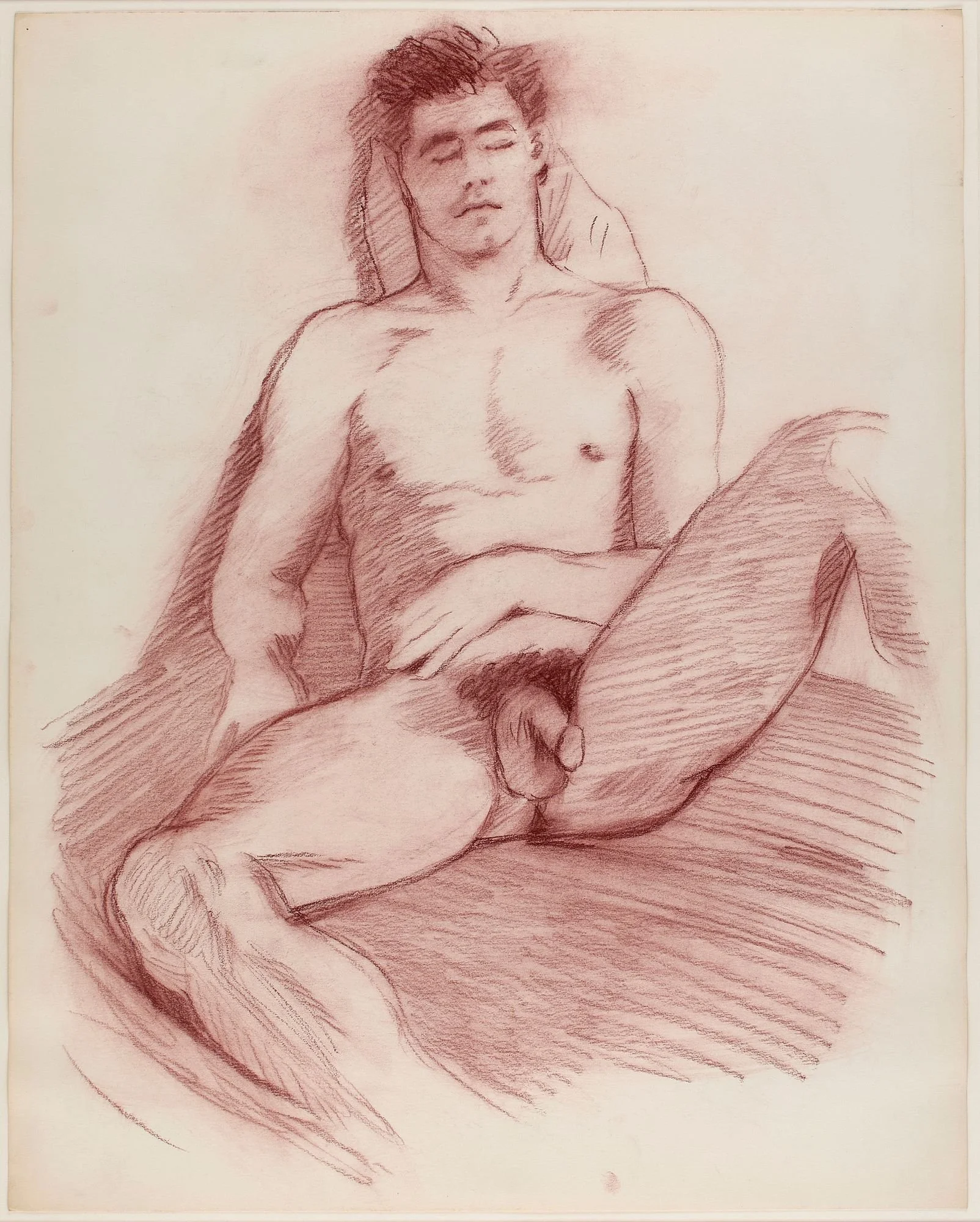
"Figure Study 4." Conte crayon on paper. Offered in AFTER DARK on 6 November 2025.
NOTE: The following article is NSFW and includes images of artistic nudity.
Joe Brainard was an American artist, poet, costumer, and theater set designer. Born in Salem, Arkansas, Brainard was raised in Tulsa, Oklahoma. While in high school, he co-founded The White Dove Review, a literary journal for which Brainard served as its art director. After briefly attending the Dayton Art Institute on a scholarship, he dropped out after a few months and moved to New York City in 1960.
Brainard became an integral member of the New York School, a loosely defined network of poets, artists, writers, musicians, and dancers active during the 1950s and 1960s. In his artistic circles, he formed lasting friendships and collaborations with key figures such as John Ashbery, Frank O'Hara, Ted Berrigan, and Kenward Elmslie. Brainard illustrated the covers of poetry books and literary journals associated with the group.
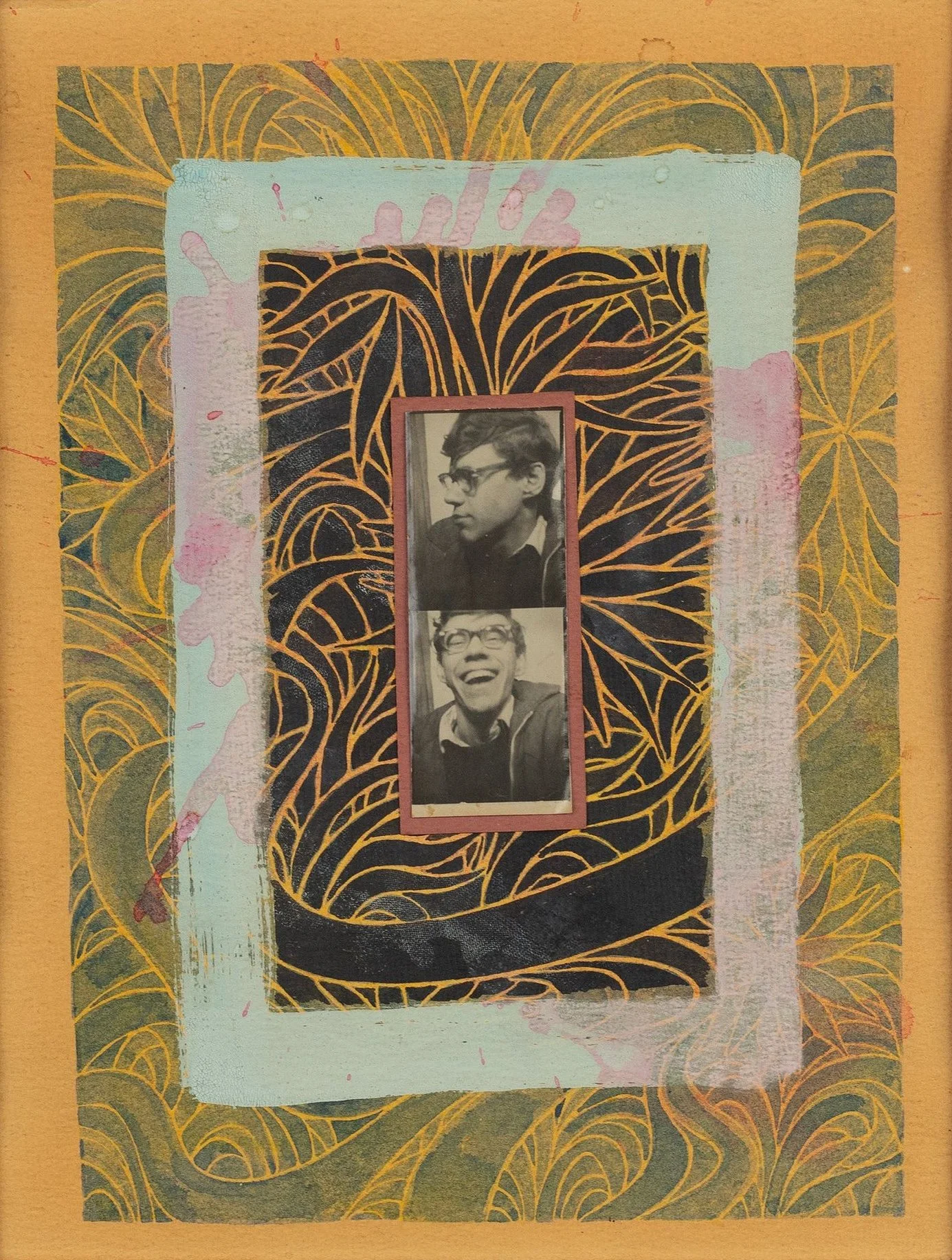
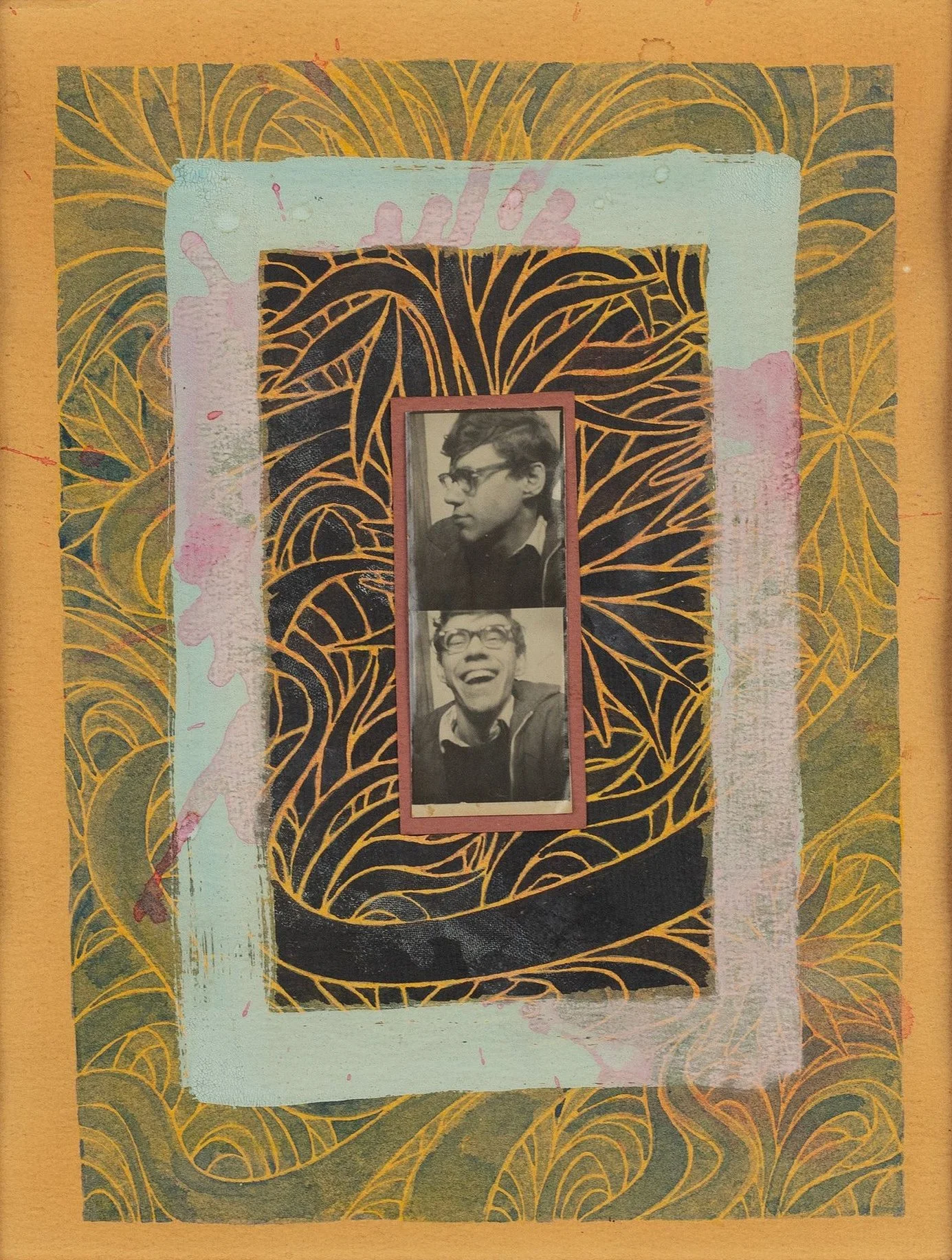
Joe Brainard. “Self Portrait”, circa 1960s. Mixed media collage with photo-booth photograph strip. Offered in AFTER DARK on 20 February 2025.
Brainard's early artistic production centered on mixed-media collage, where he drew upon imagery culled from advertising, comic strips, religious iconography, and other mass-produced printed matter. Recurring motifs in his two-dimensional work included pansies, butterflies, hearts, the Virgin Mary, cigarette advertisements, and the comic-strip character Nancy created by Ernie Bushmiller.
As an openly gay man at the heart of the Lower East Side’s art scene, Brainard frequently incorporated homoerotic imagery in his collage practice. He repurposed photography of nude men sourced from softcore pornographic and physique magazines for what he called his “jack-off” collages. [1]
Following a visit to Boston in 1963, Brainard increasingly realized the sculptural possibilities of found objects and assemblage. In his three-dimensional body of work, he incorporated an eclectic range of otherwise kitsch materials including toy dolls, religious statuettes, bottle caps, cigarette butts, artificial flowers, and even the body parts of taxidermied animals.
Although his work shared certain affinities with the Pop Art movement, Brainard approached popular culture with his own personal touch rather than indifference. As curator Constance M. Lewallen has observed:
“[Brainard] was never a Pop artist in the strict sense. Warhol and Lichtenstein maintained an ironic distance from their subject matter. Brainard’s relationship to the material world of popular culture was one of affection or amusement or both. Moreover, he was too protean to be stuck with Pop or any other label. In what now would be considered Postmodern fashion, he drew his materials and images from everywhere”. [2]
Unlike his contemporaries, who embraced the seriality and mundanity of Pop Art or the sterility of Minimalism, Brainard maintained a distinctive painterly and handmade character in his works.
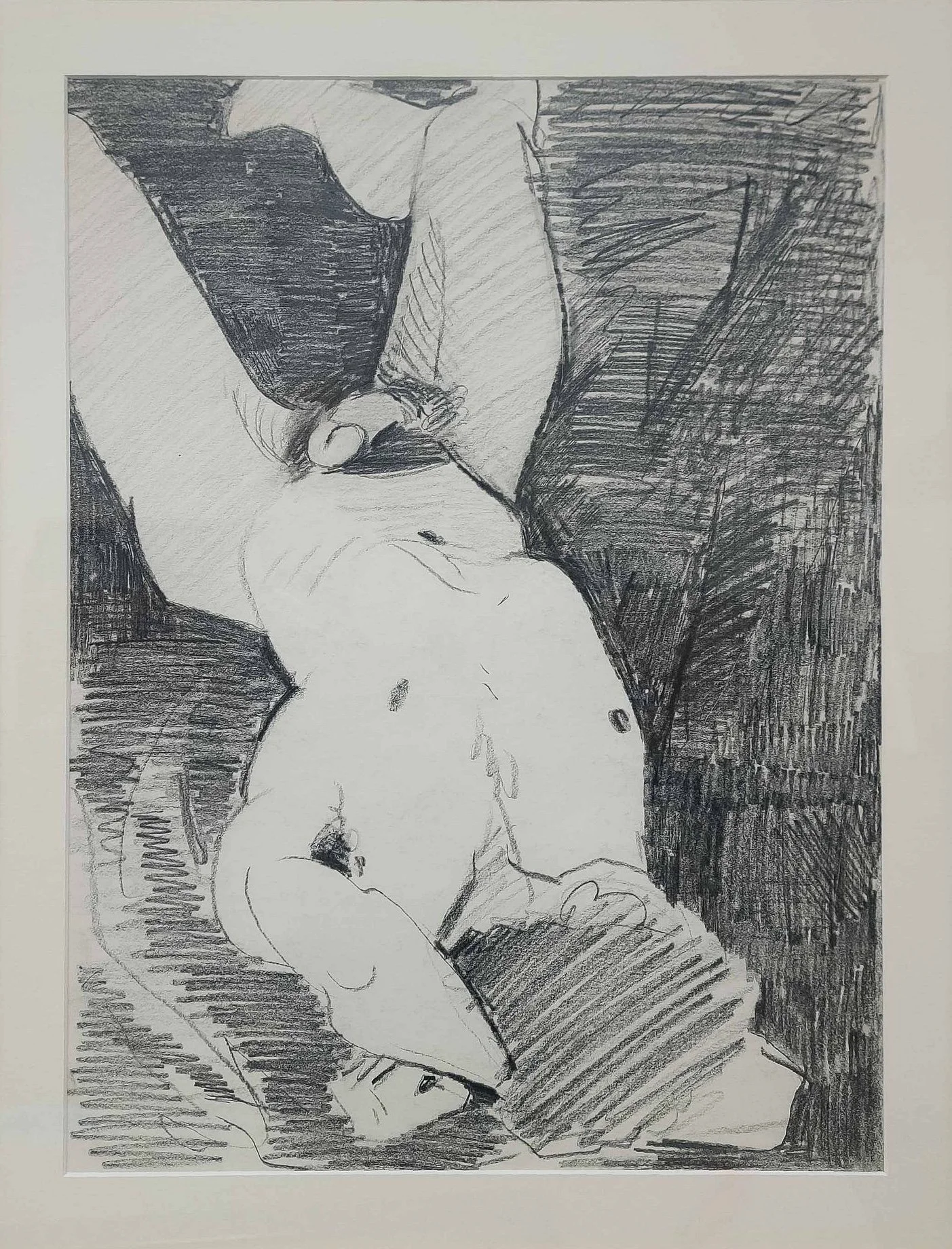
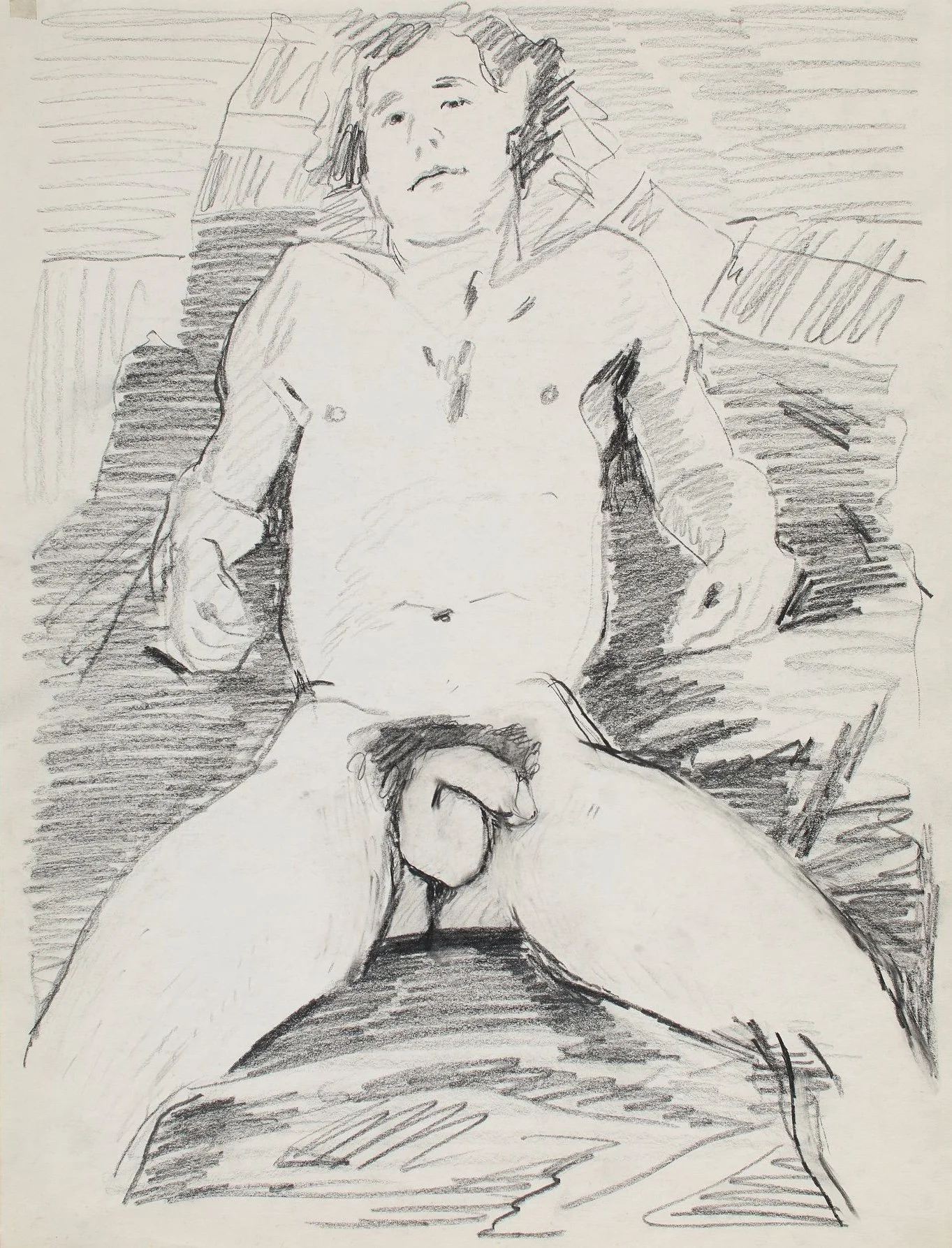
Joe Brainard. Drawing from the artist’s portfolio, circa 1970s. Graphite on paper. Offered in AFTER DARK on 23 April 2026.
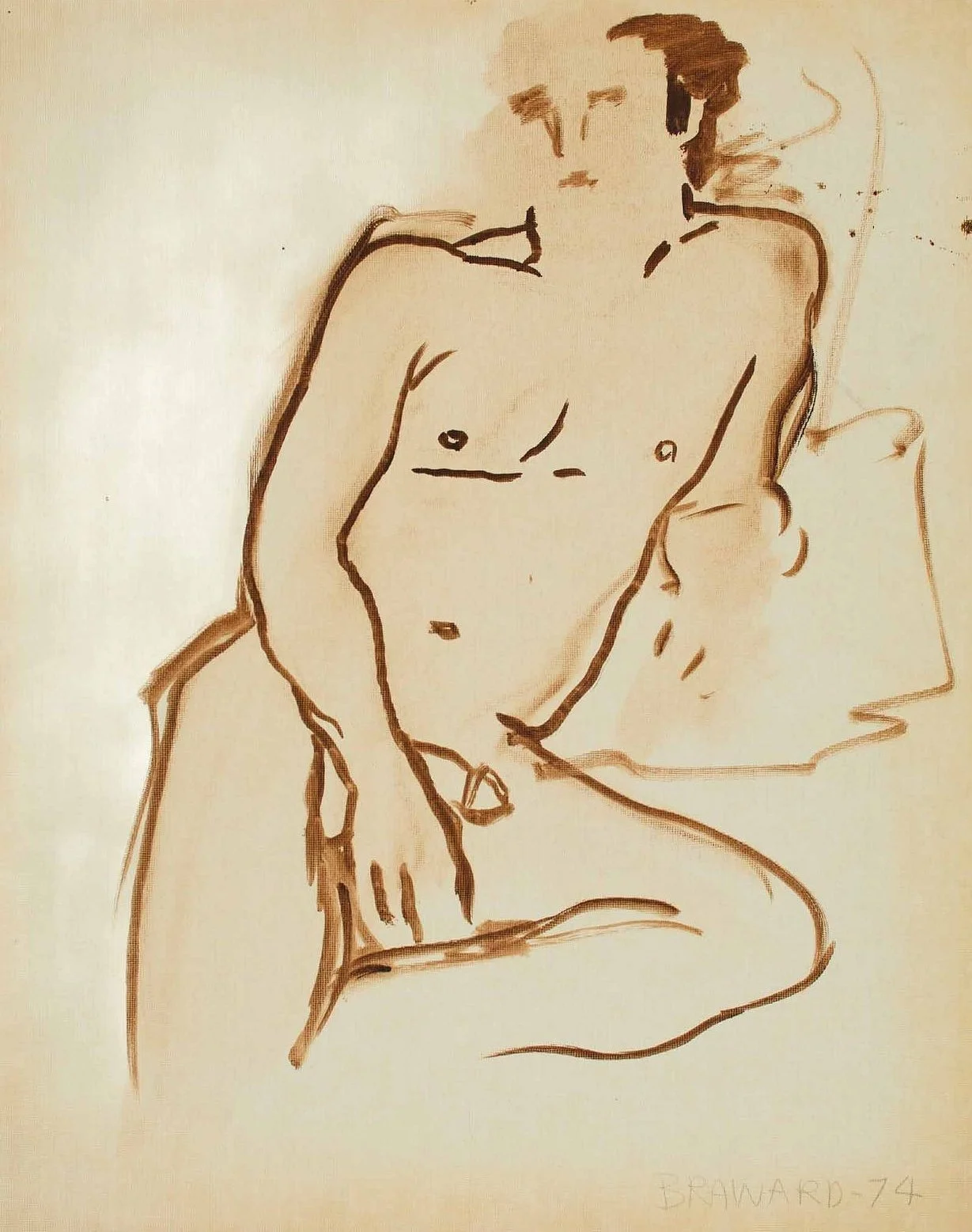
Brainard's first solo exhibition was held at the Alan Gallery (later named the Landau-Alan Gallery) in New York. In 1970, the Phyllis Kind Gallery in Chicago staged the first major retrospective of his work. Throughout his career, Brainard continually oscillated between different media —drawing, collage, cut-outs, assemblage, and found-object sculpture— resisting easy categorization of his artistic practice. Brainard foremost considered “himself a painter”. [3] Despite receiving little formal artistic training, he was an accomplished draughtsman which is particularly evident in his graphite portraits of his close friends and artistic collaborators.
In 1975, the Fischbach Gallery in New York hosted the final exhibition to take place during the artist’s lifetime. Brainard exhibited some 1,500 collages and small-scale paintings. During the late 1970s, he gradually withdrew from the commercial art world. In private, he continued to produce personal works which he gifted as tokens of his friendship. As Nathan Kernan has noted, thereafter “as legend has it, [he] spent the rest of his life reading novels.” [4]
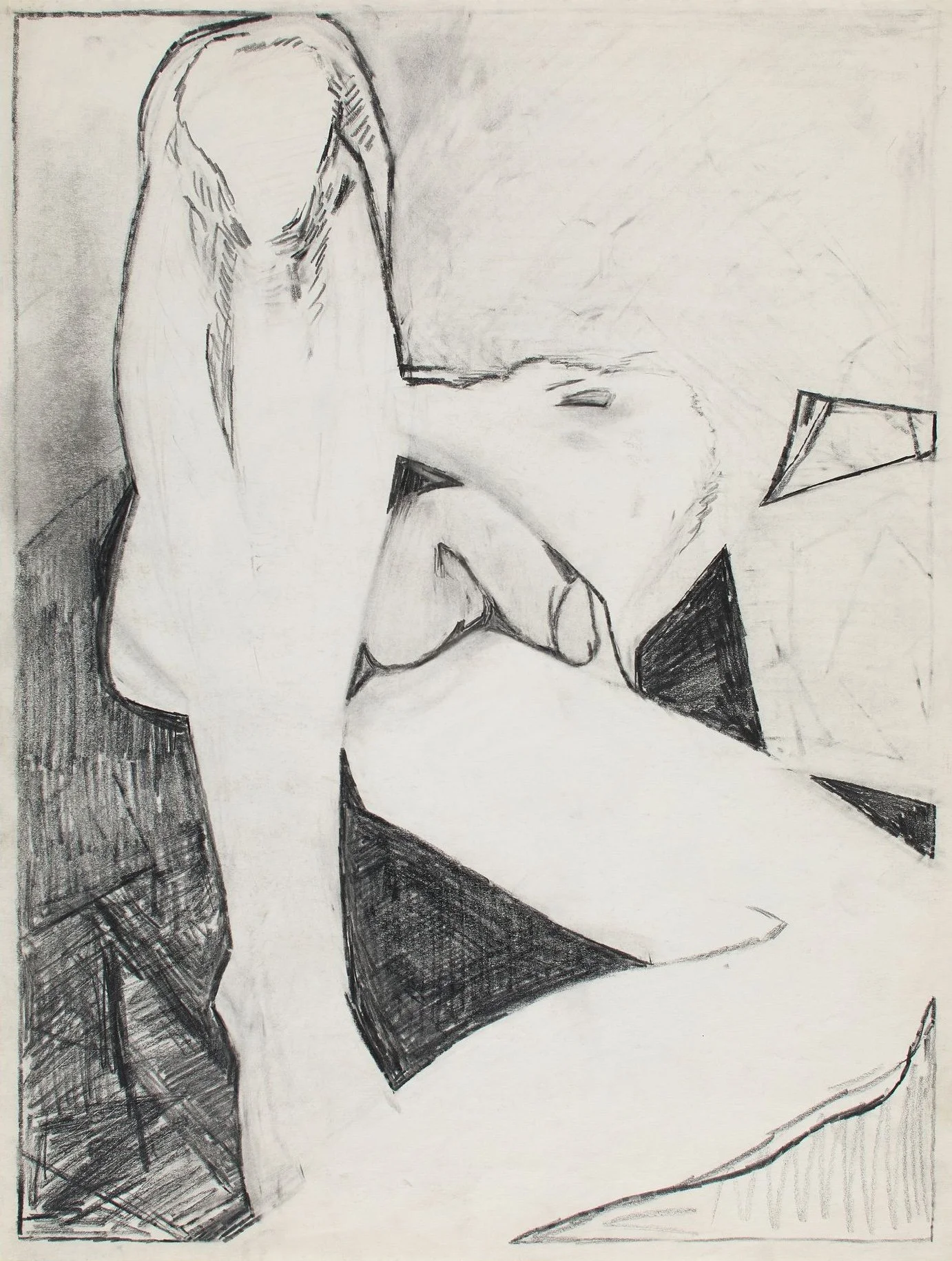
Joe Brainard. Drawing from the artist’s portfolio, circa 1970s. Graphite on paper. Offered in AFTER DARK on 18 June 2026.
Alongside his visual art, Brainard achieved lasting recognition as a writer and published numerous volumes of poetry and prose. Brainard is probably best-known as the author of I Remember (1975), an experimental memoir composed entirely of recollections prefaced by the refrain “I remember.”
Brainard died from AIDS-related pneumonia in New York City in 1994 at the age of fifty-two.
Since his passing, Brainard’s visual art has been subject to retrospectives at MoMA PS1 and the Berkeley Art Museum. His estate is represented by the Tibor de Nagy Gallery. His works are held in the collections of the Metropolitan Museum of Art, the Museum of Modern Art in New York, the Whitney Museum of American Art, the Fogg Museum at Harvard University, and the RISD Art Museum.
Notes
[1] Joe Brainard, The Collected Writings of Joe Brainard (New York: The Library of America, 2002), p. 514.
[2] Constance M. Lewallen, “Acts of Generosity,” Joe Brainard: A Retrospective (Berkeley: University of California, Berkeley; New York: Granary Books; San Diego: Mandeville Special Collections Library, University of California, San Diego, 2001), p. 10.
[3] Lewallen, p. 30.
[4] Nathan Kernan, “Joe Brainard: The Madonna of the Future,” in Joe Brainard’s Art, ed. Yasmine Shamma (Edinburgh: Edinburgh University Press, 2019), p. 64.
Contributors
Barry Oliver
Cataloger, LGBTQ+ Art & Material Culture
NOTABLE LOTS
Click the lot image for more information