
Auction Highlights: Japanese Eroticists
Auction Highlights: Japanese Eroticists
Highlights from AFTER DARK/October 2026
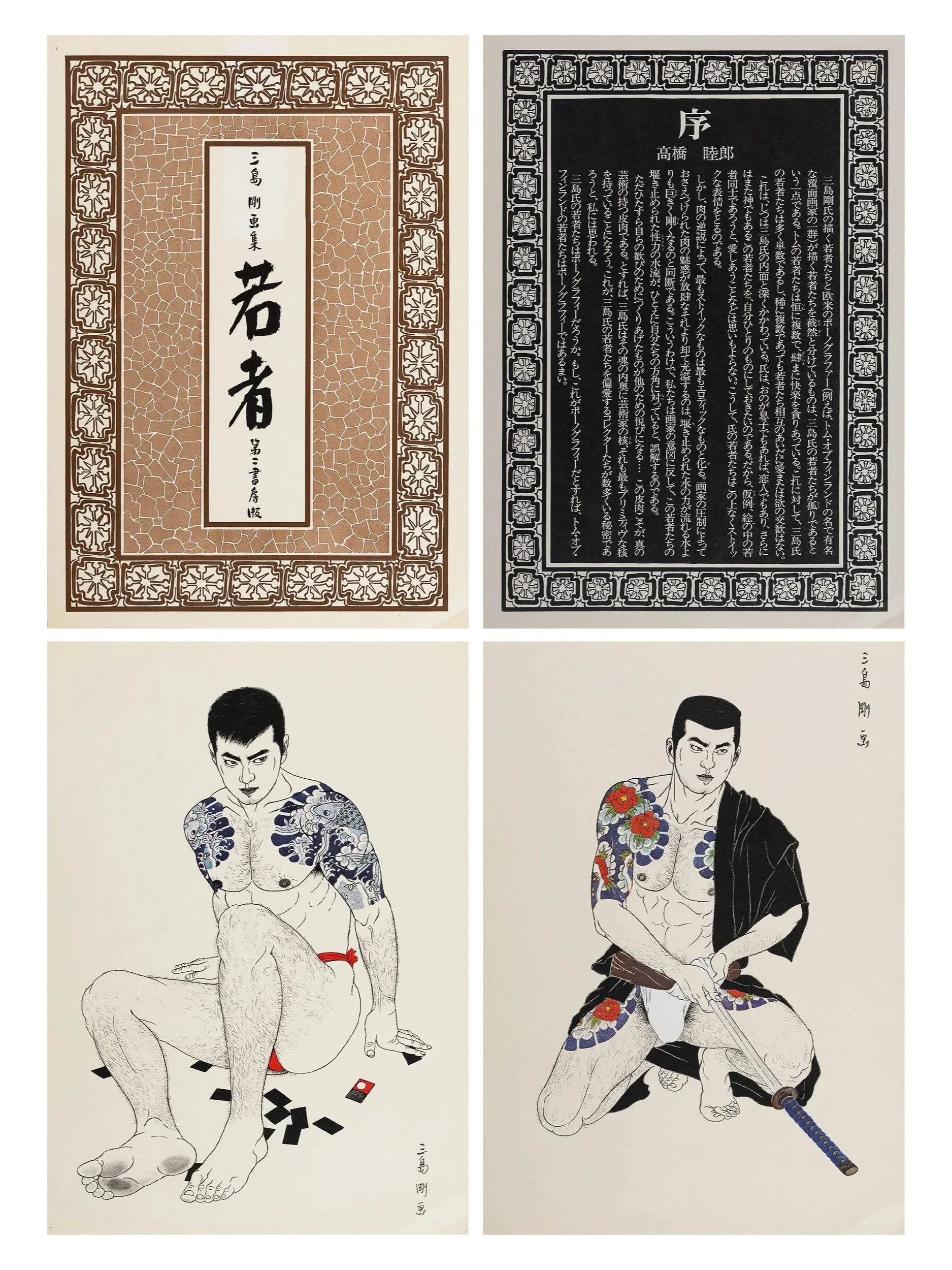
Lot 13: Go Mishima (Tsuyoshi Yoshida) (Japanese, 1924-1988). Go Mishima's Book of Pictures of Young Men [Mishima Go gashu Wakamono], 1972. Portfolio of Twenty-One (21) Offset Lithographs. Estimated at $2,000 - $3,000.
Our upcoming AFTER DARK/October auction showcases the full range of Japanese homoerotic art, with featured works from the early Post-War artist Go Mishima, the second-wave eroticist Tsuyoshi Yoshida, and the genre-defining illustrator Gengoroh Tagame.
We’ll be starting today’s highlights with Go Mishima’s iconic 1972 print portfolio, Book of Pictures of Young Men. With bulging muscles and tattooed bodies, Mishima’s men demonstrate some of the earliest homoerotic aesthetic archetypes within Japan.
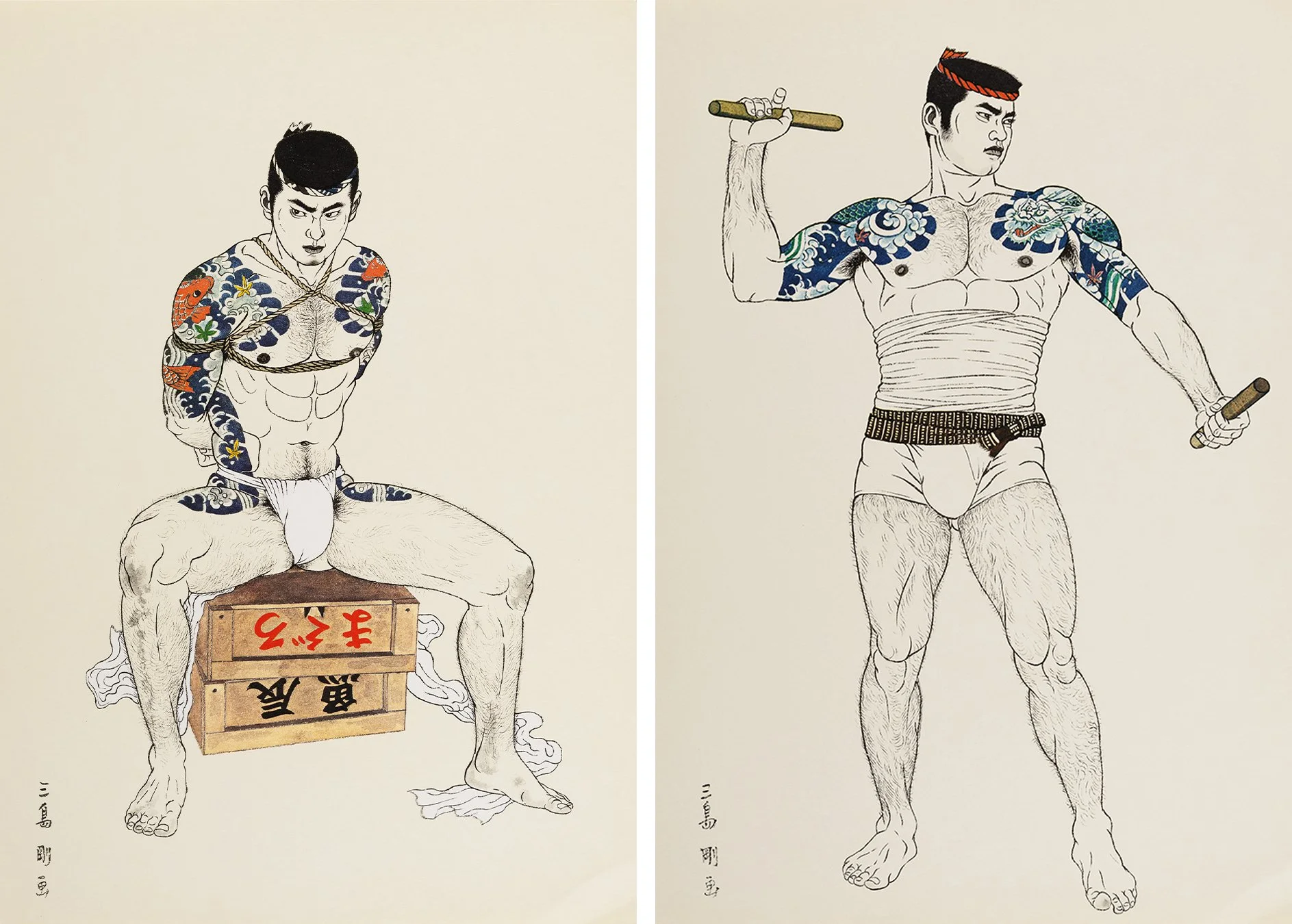
In the late 1940s, the artist found himself a part of the nascent gay culture of the Post-War period, immersing himself in the nightclubs, cruising boxes (hattenba), saunas, and gyms of Tokyo. It is through his interest in bodybuilding that he would meet the infamous writer Yukio Mishima, who would inspire the artist’s pen name. Both of them had shared an interest in the hypermasculine aesthetics of the yakuza, with Go Mishima often featuring their irezumi tattoos and traditional fundoshi loincloth in his art.
Mishima was an early contributor to Barazoku, the first commercial gay magazine in Japan. This portfolio was published by the magazine’s distributor, Daini Shobo, and showcases the full range of the artist’s illustrative interests, from the macho, yakuza subject to the traditional practice of shibari and the sarashi binding. Go Mishima’s Book of Pictures of Young Men is a perfect encapsulation of the early gay culture that Mishima and his contemporaries established.
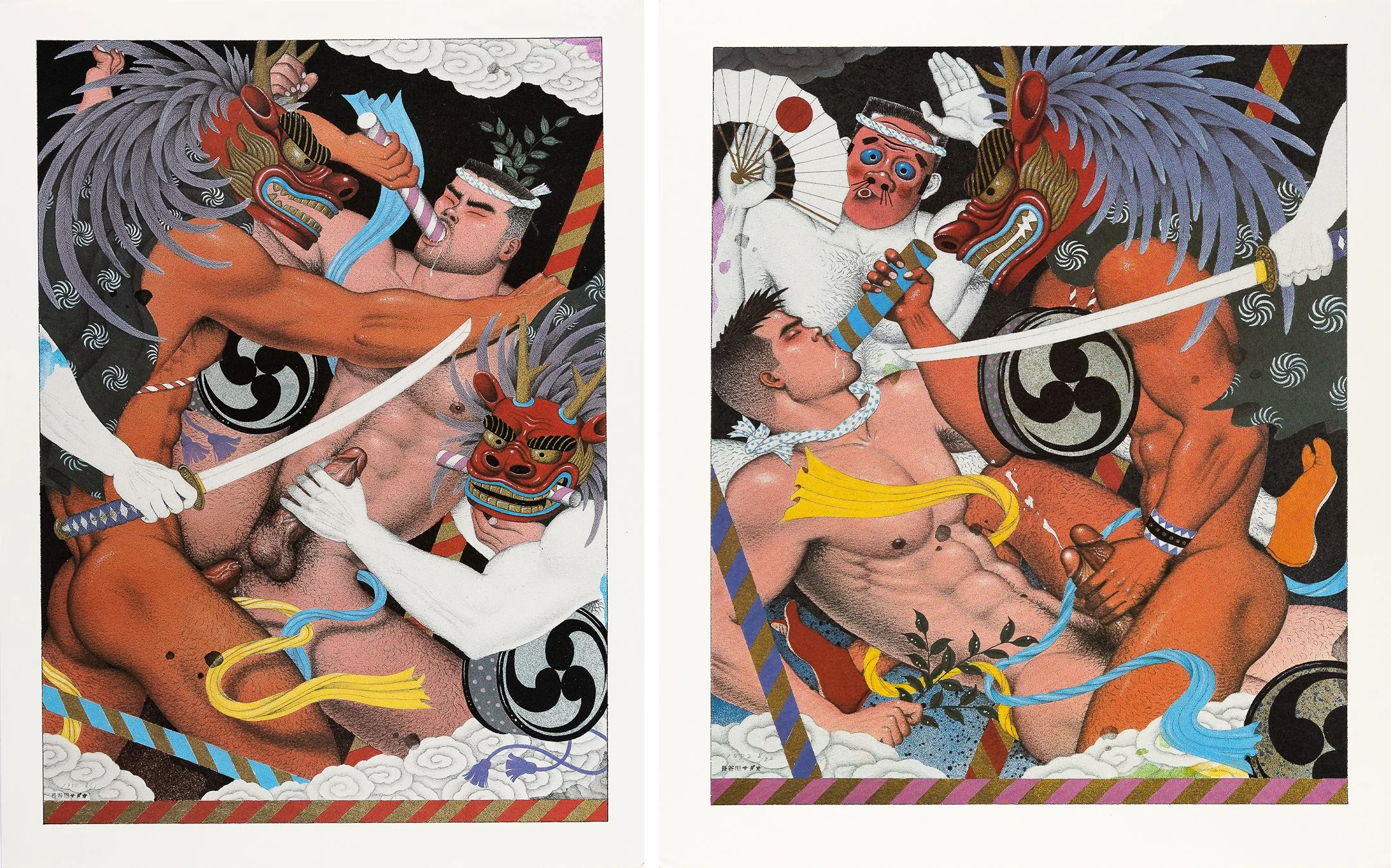
Also coming to sale in this month’s catalog are a series of works by the eroticist Sadao Hasegawa. Published by KL-Pacific Graphics in 1985, San Francisco, these prints were among the earliest of Hasegawa’s work to be presented to a western audience. Hasegawa rarely published or exhibited his work outside of Japan, only briefly collaborating with IN TOUCH for Men Magazine to distribute the more overtly sexual works shown here, and later publishing a short-run monograph through Gay Men’s Press in 1990.
The first set of prints (as seen above) were erroneously published in English as Lion Dance(s), but more accurately translated as Deer Dance(s), representing erotic renditions of the traditional folk dance of Miyagi Prefecture. Featuring performers dressed in antlered costumes with taiko drums at their side, these works exemplify the artist’s use of traditional Japanese mythology and spirituality within his homoerotic scenes.
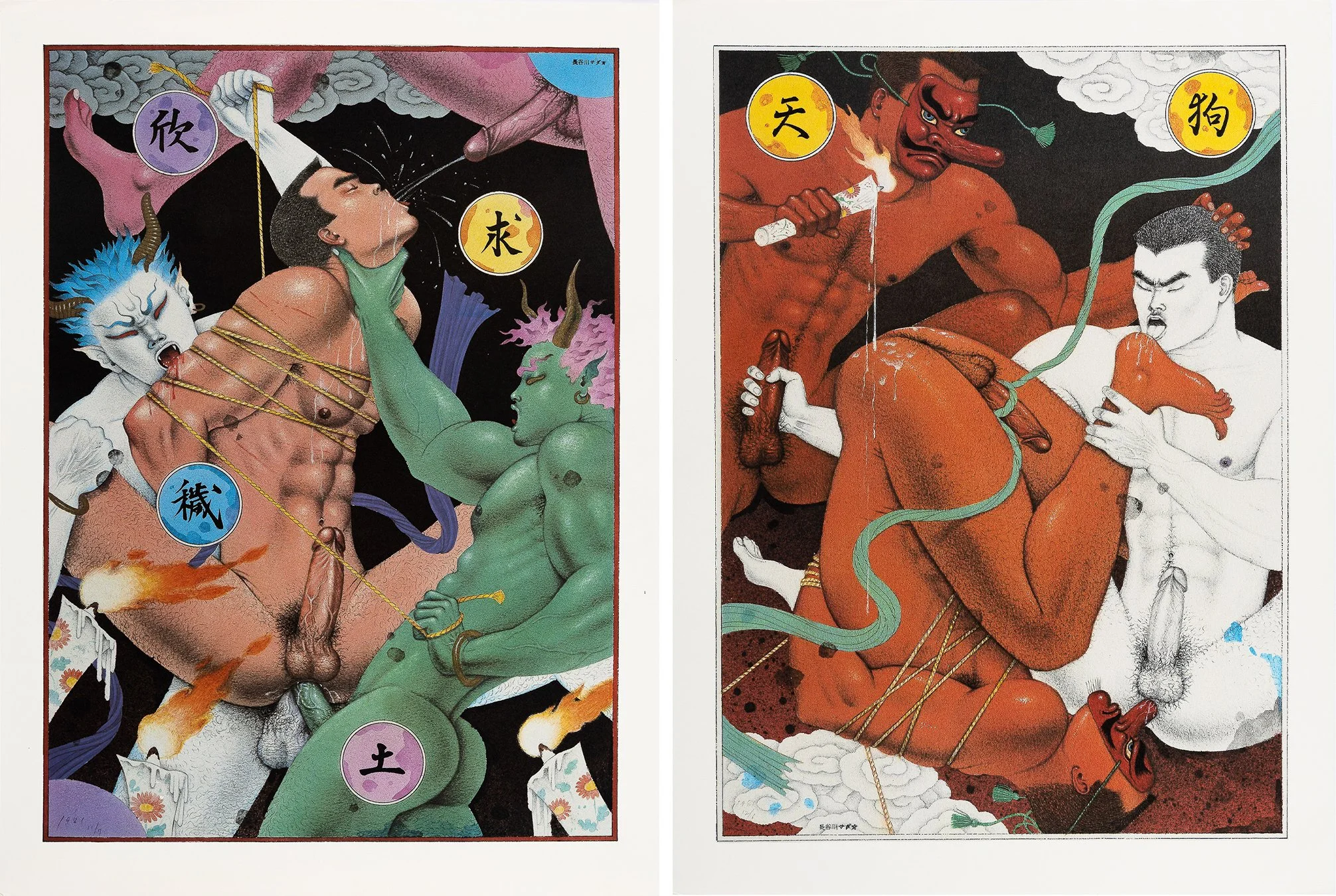
As referenced in his interview with IN TOUCH, Hasegawa’s earliest work in the 1970s was heavily influenced by ancient art outside of Japan, with a particular emphasis on the art of Africa, Greece, India, and Island Southeast Asia. However, towards the mid-1980s, the artist “rediscovered” Japanese culture and Buddhist cosmology. In his own words, “I have once again recognized that I am Japanese, so I want to create a Jyonen world [a very complex word for the true, ancient, gut-level Japanese nature and style]...”
This influence can be seen in the prints featured above: Gon Gu Edo II references the Buddhist concept of the Impure Land [Edo], a realm where beings are punished for their earthly desires and ethical defilements, while Tengu features the eponymous legendary spirits which would be re-interpreted in Japanese Buddhism as demons who kidnapped and seduced virtuous men.
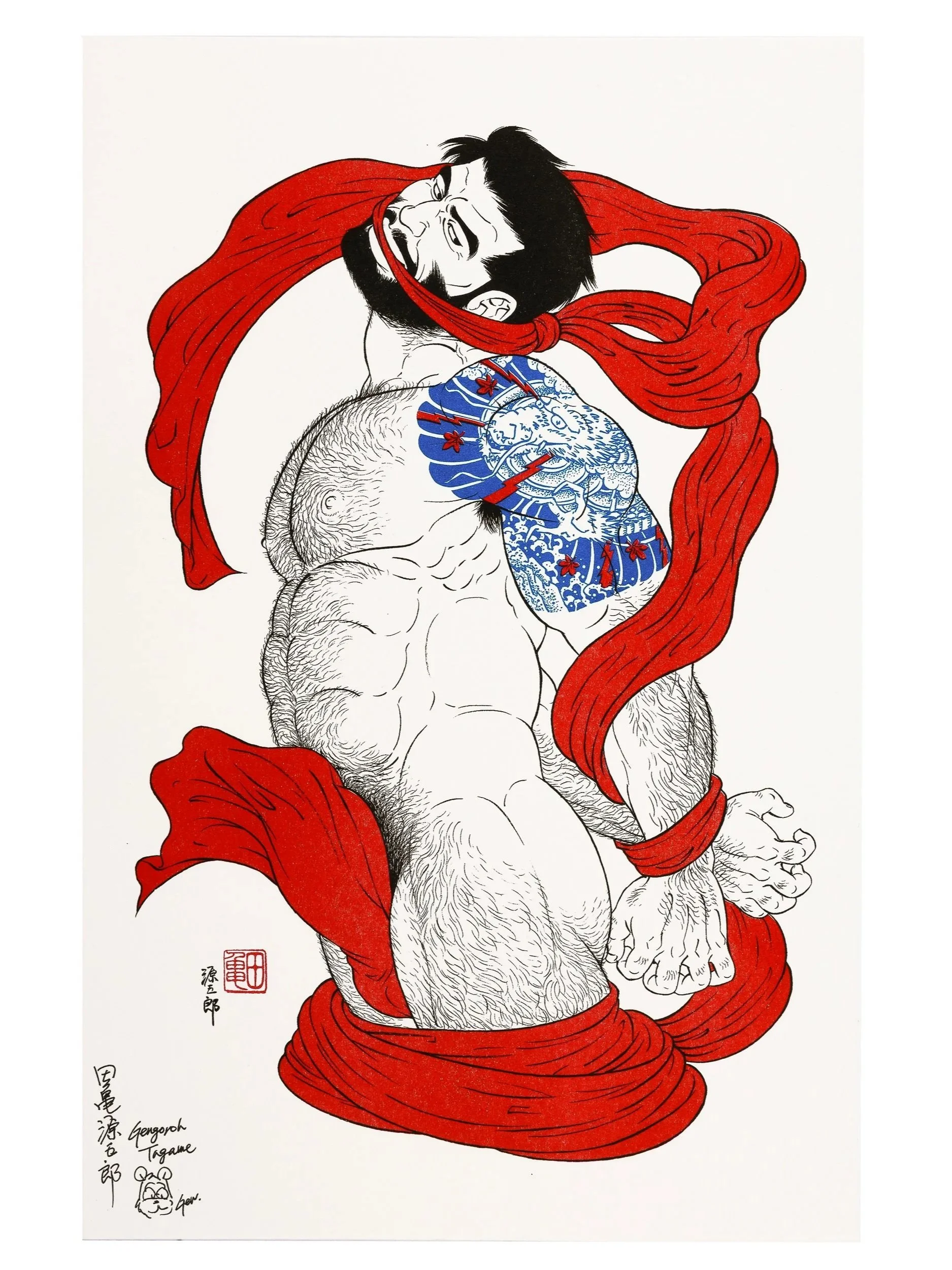
Lot 16: Gengoroh Tagame (Japanese, b. 1964). Red Silk, 2010. Lithograph. Signed in ink on the bottom left. Estimated at $500 - $800.
Our last highlight comes from the preeminent gay artist, writer, and art historian Gengoroh Tagame. Tagame is widely considered to be the most influential artist within the contemporary gay manga genre, and he is credited with establishing and popularizing the bear aesthetic within Japan.
Beginning his career in the late 1980s, Tagame is influenced by both the art of older Japanese eroticists like Go Mishima and Sadao Hasegawa, as well as the works of many western illustrators like Tom of Finland, Rex, and Bill Ward, who began to see increasing popularity in Japan. Tagame’s early work was featured primarily in Sabu (a publication founded by the aforementioned Hasegawa), but he would later transition to publishing in his own magazine, G-Men.
Today, Tagame is known for both his success as an artist, as well as his significant contributions to art history. Tagame’s archival work and retrospective scholarship on Japanese gay culture from the 19th century to the present form the basis for the modern gay art canon in Japan.
We hope that this series of highlights from our latest AFTER DARK catalog have provided a glimpse into the rich history of gay art and culture in Japan. Browse the catalog to discover these highlights and more historically significant works of art that showcase the beauty of the male form.
There’s still plenty of time to register, request condition reports, or place pre-bids on any lots you’re interested in for our upcoming October 29th auction!
Don’t forget to follow us on Instagram, and see our Artist Index for more original scholarship on the many artists featured in our catalogs!
Mark your calendars for the livestreamed simulcast sale on 10/29/2026 at 7PM EST, and tune in to the video for exclusive commentary from the auctioneer.
Register today on our platform to access our lowest buyer’s premium (25%).