
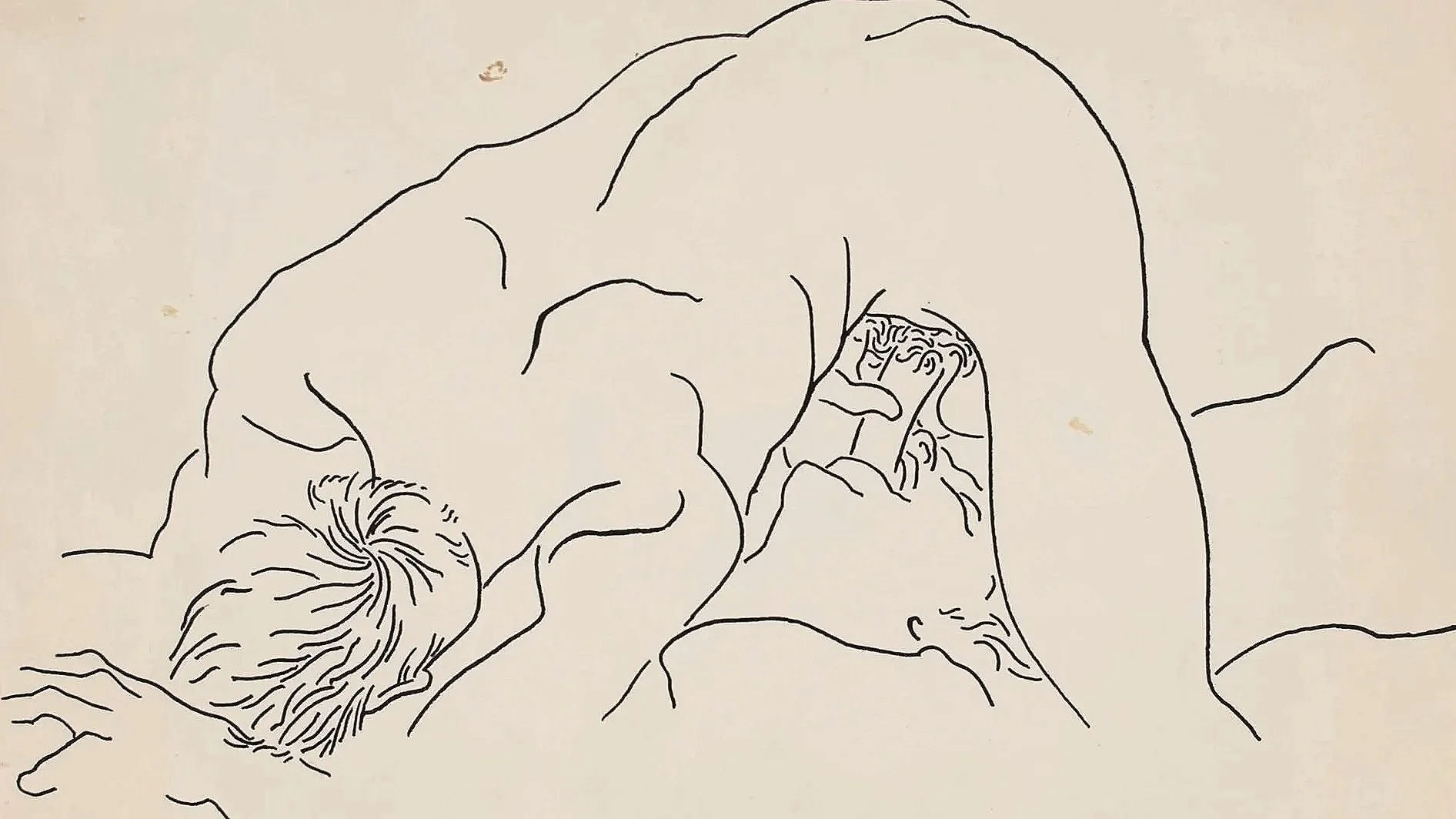
SAMUEL STEWARD
AMERICAN, 1909–1993
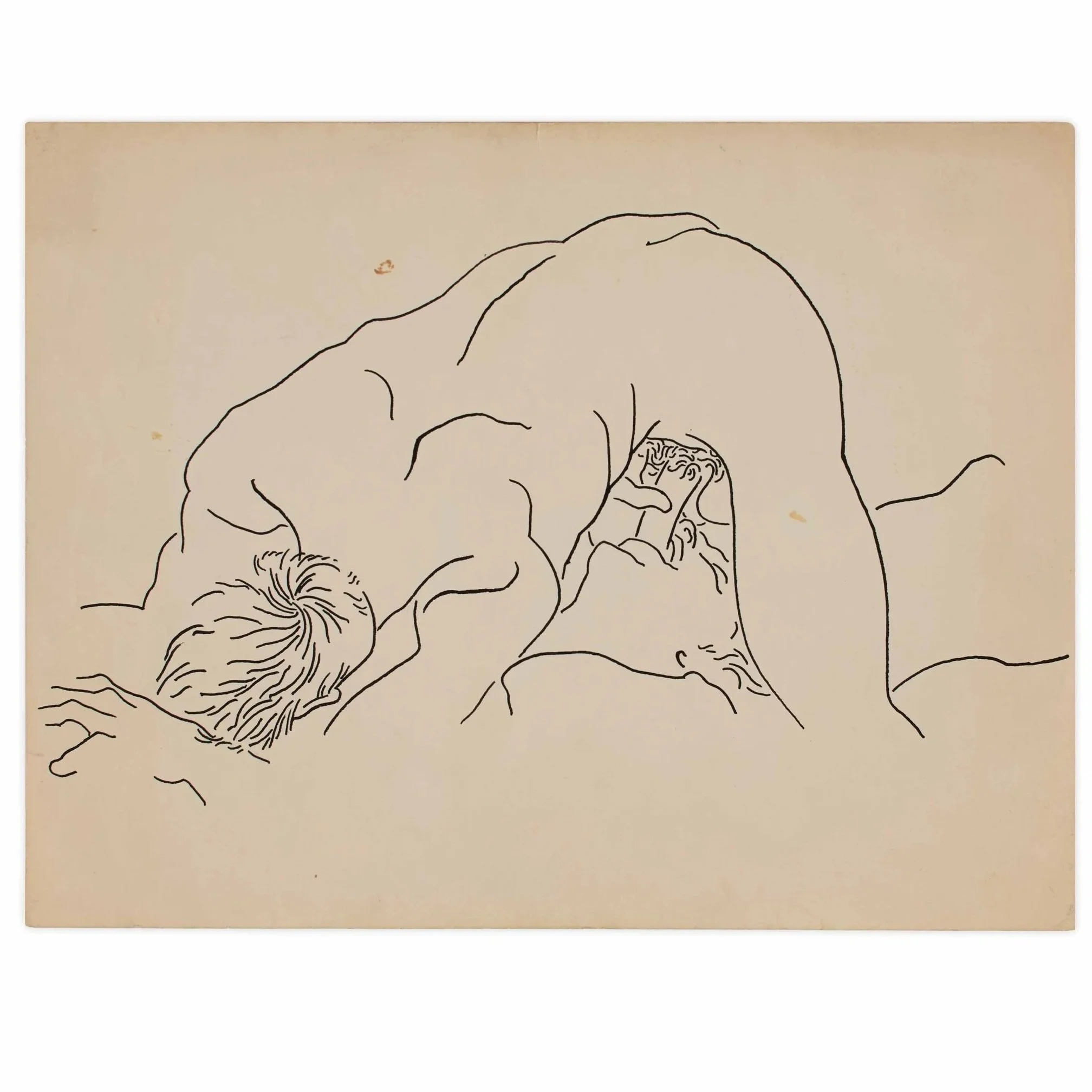
Samuel Steward. Untitled. Ink on paper. Offered in AFTER DARK on 23 April 2026.
NOTE: The following article is NSFW and includes images of sex and artistic nudity.
Samuel Morris Steward was an American university professor, novelist, poet, tattoo artist, illustrator, and pornographer who is best remembered as a chronicler of 20th-century gay culture. Throughout his life, he produced a substantial body of erotic art and literature documenting the gay experience and BDSM subculture in the United States.
Steward received his PhD in English from Ohio State University in 1934. Shortly thereafter, he accepted a one-year appointment as a lecturer at Washington State College (now Washington State University). In 1936, he published his debut novel titled Angels in the Bough. The book’s sympathetic treatment of a sex worker character contributed to the college’s decision to not renew his temporary contract. Steward subsequently relocated to Chicago, where he taught at the Catholic Loyola University and later at DePaul University.
For nearly two decades he maintained a successful academic career while simultaneously pursuing literary, artistic, and sexual interests that he concealed from his professional colleagues. In 1956 he abandoned his “ivory-towered” position in academia, to become a full-time tattoo artist. [1] Under the professional alias of Phil Sparrow, he initially practiced on Chicago’s notorious South Side Street. During the 1960s, Steward relocated to Oakland where he opened his own tattoo parlor. In California, he became closely associated with motorcycle culture and served as the unofficial tattooist for members of the Hell's Angels biker club. Following his retirement, Steward settled in nearby Berkeley, where he remained until his death from chronic pulmonary disease in 1993.
Interest in Steward's life and career has received renewed critical attention since the publication of Justin Spring's Secret Historian in 2010. A National Book Award finalist, the biography has cemented Steward as a major figure in the cultural history of sexuality, tattoo artistry, and queer literature.
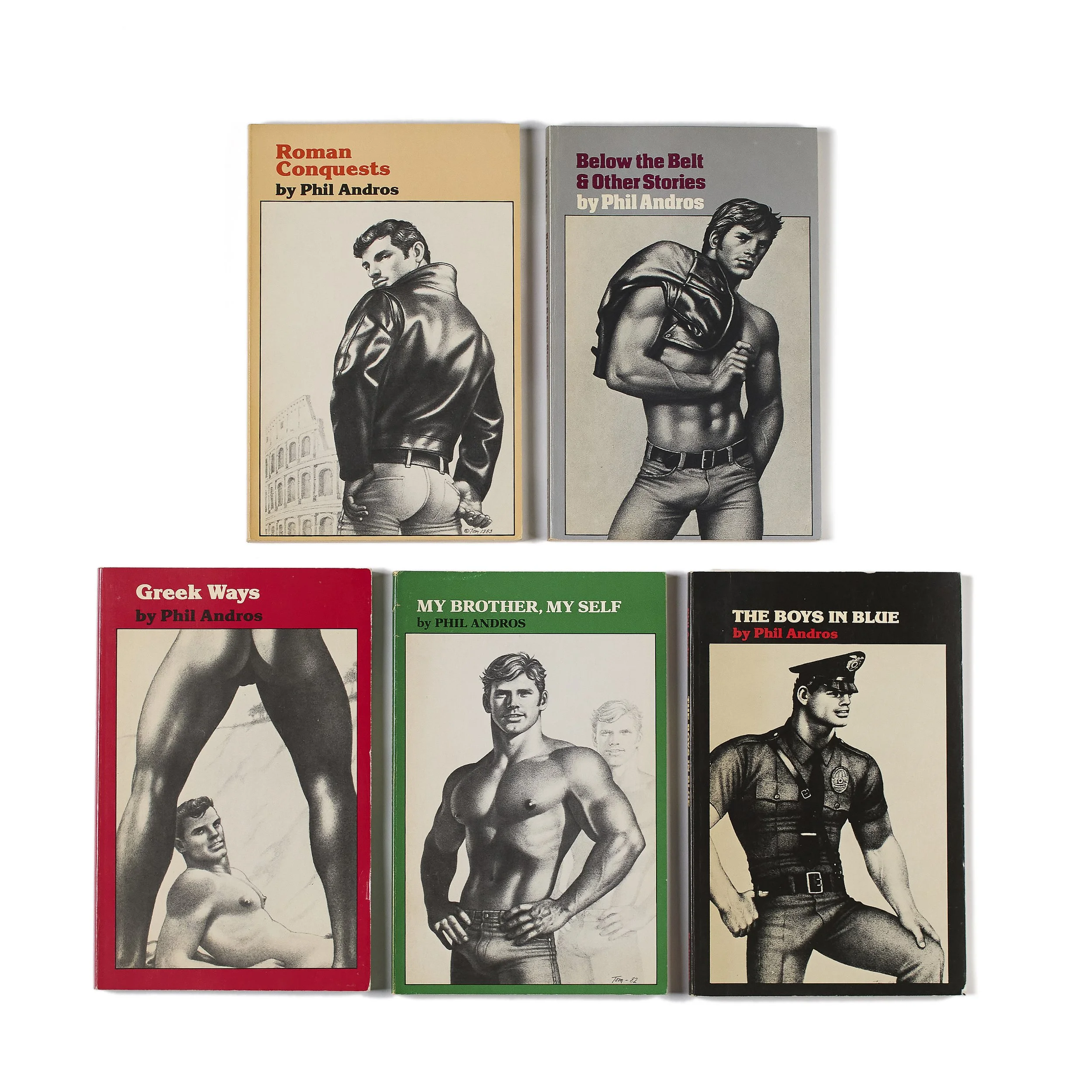
Samuel Steward. Books authored by Samuel Morris Steward under the name Phil Andros. Offered in AFTER DARK on 22 May 2025.
Beginning in the 1960s, Steward made a name for himself within gay erotic publishing under the name Phil Andros, a pseudonym derived from the Greek words philos ("love") and andros ("man"). Narrated by a sexually adventurous hustler, the Phil Andros novels have since become classics of twentieth-century gay pulp fiction.
Steward moved within significant literary circles in his career as a novelist. His admirers included Christopher Isherwood, André Gide, Gertrude Stein, and her life partner Alice B. Toklas with whom he maintained extensive correspondence. Steward later edited and published their collected letters and memoirs in the volume Dear Sammy: Letters from Gertrude Stein and Alice B. Toklas. Steward authored numerous non-fiction titles and essays, including a social history account of tattoo practice in Bad Boys and Tough Tattoos.
Steward became the most frequent and prolific American contributor to the trilingual Swiss homophile periodical, Der Kreis, which printed his original poetry, essays, and illustrations. His work additionally appeared in other European gay-interest publications, including eos in Denmark and amigo in the Netherlands.
Many of Steward's novels were reissued during the 1980s with cover art created by the legendary homoerotic illustrator Tom of Finland. He was also one of the oldest contributors to Drummer, the leading gay leather magazine in the United States. The artist Chuck Arnett illustrated Steward's erotic fiction in Drummer, while Arnett's partner Dom Orejudos (better known by his artist pen name Etienne) later designed the dust jacket for a reissue of Steward's novel $tud.
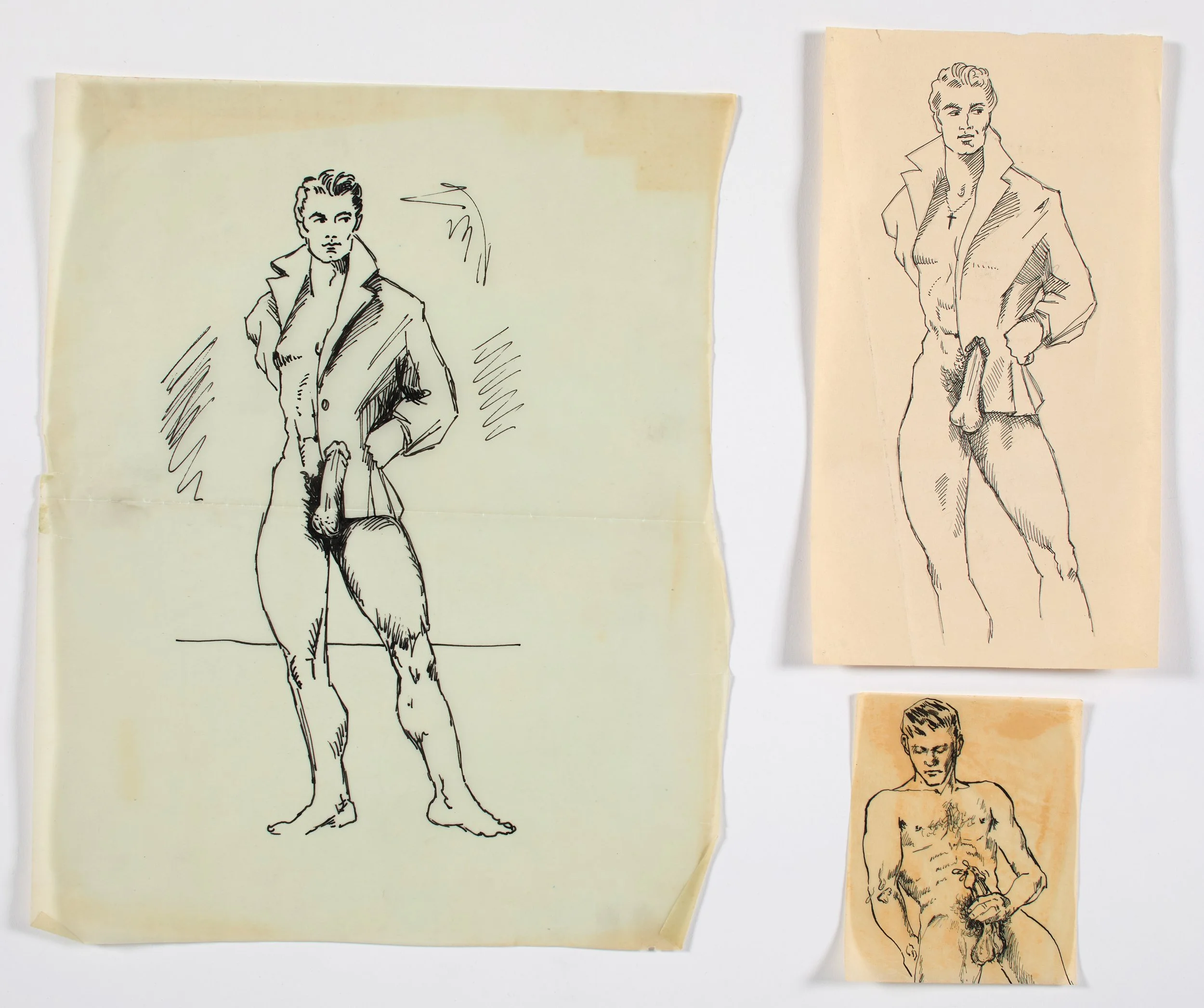
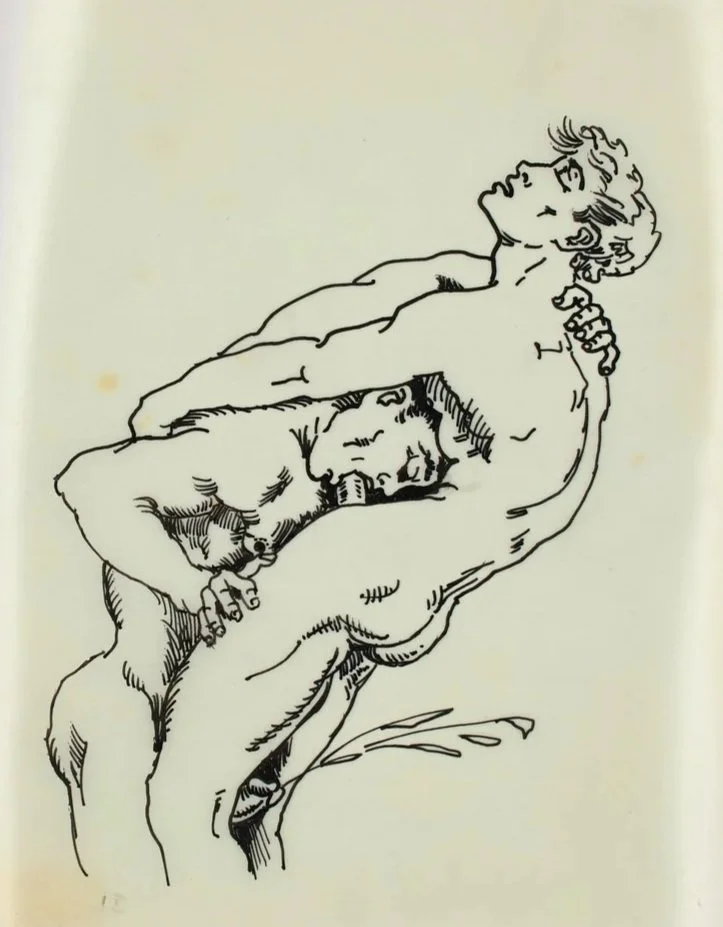
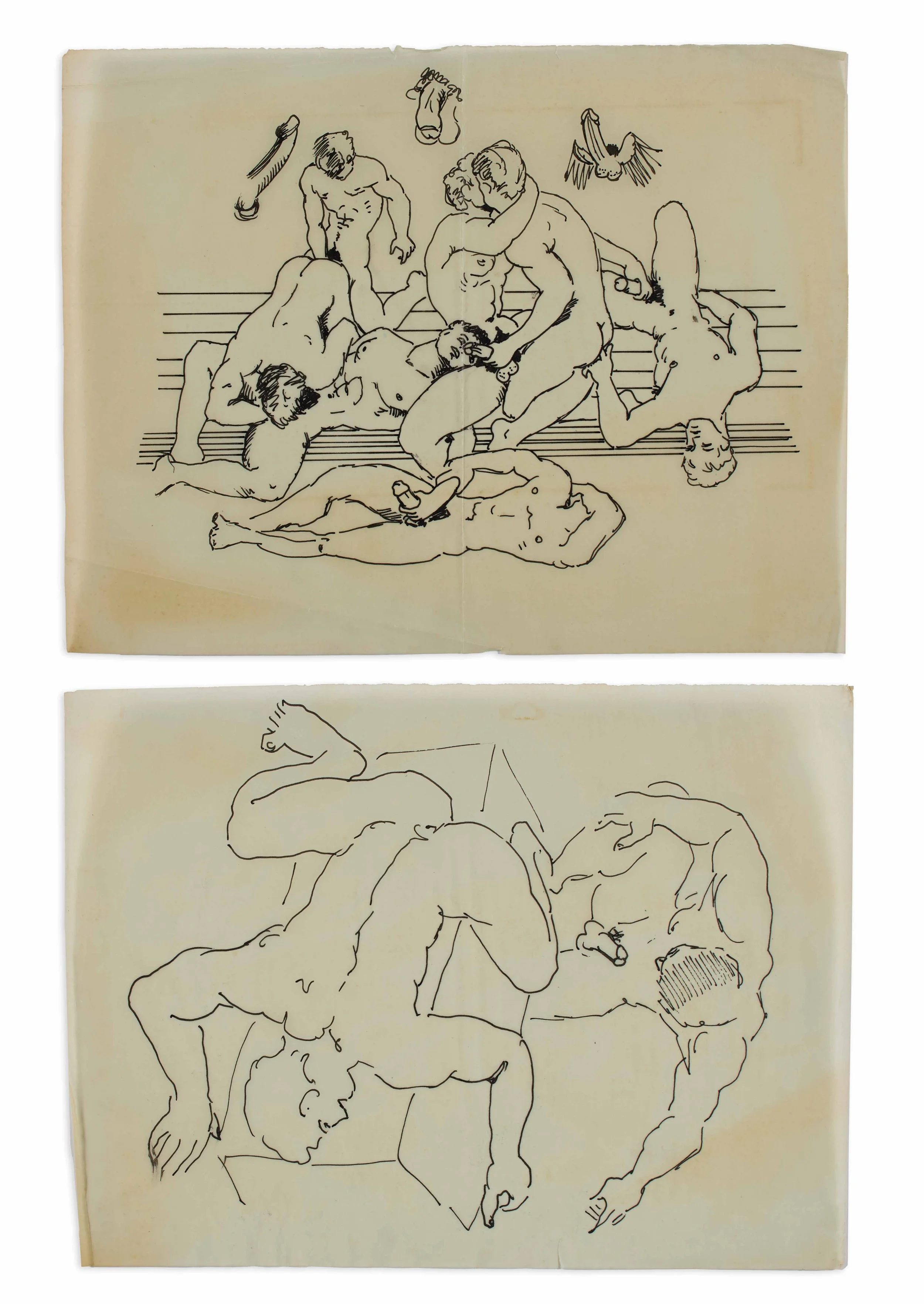
Samuel Steward. Drawings from a Portfolio. Offered in AFTER DARK on 18 June 2026.
In early 1949, he met the pioneering sexologist Alfred Kinsey who initially commissioned Steward to document the possible sexual motivations behind the tattooing process. Steward thereafter helped facilitate the Kinsey Institute for Research in Sex, Gender, and Reproduction’s research into sadomasochism and “was among the first to acquaint Kinsey with BDSM” practices. [2] Kinsey introduced Steward to fellow erotic artist Mike Miksche, better known under the moniker Steve Masters, and the pair participated in “first filming of an S/M encounter for the institute's archives.” [3] Steward's testimony contributed to the popularization of the now-commonplace abbreviation "S/M."
Steward's most remarkable documentary project was the appropriately named Stud File, an extensive card catalogue in which he meticulously recorded more than 4,500 sexual encounters between years 1924 and 1974. Among those whom Steward claimed to have encountered sexually were actors Rock Hudson and Rudolph Valentino, poet Lord Alfred Douglas, and a brief affair with the playwright Thornton Wilder. Part sexual diary, part social archive, the collection remains an invaluable resource for historians of American gay culture.
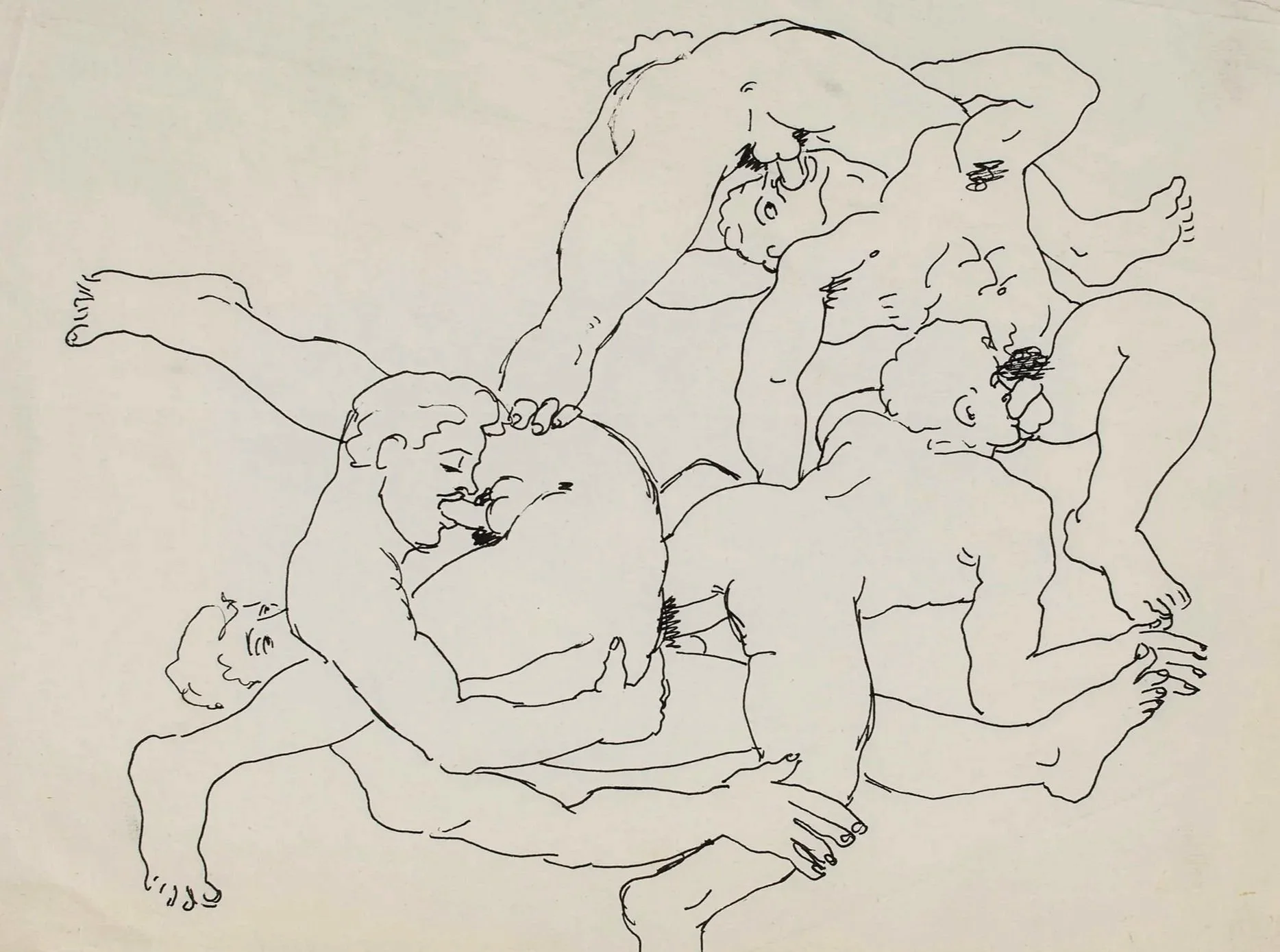
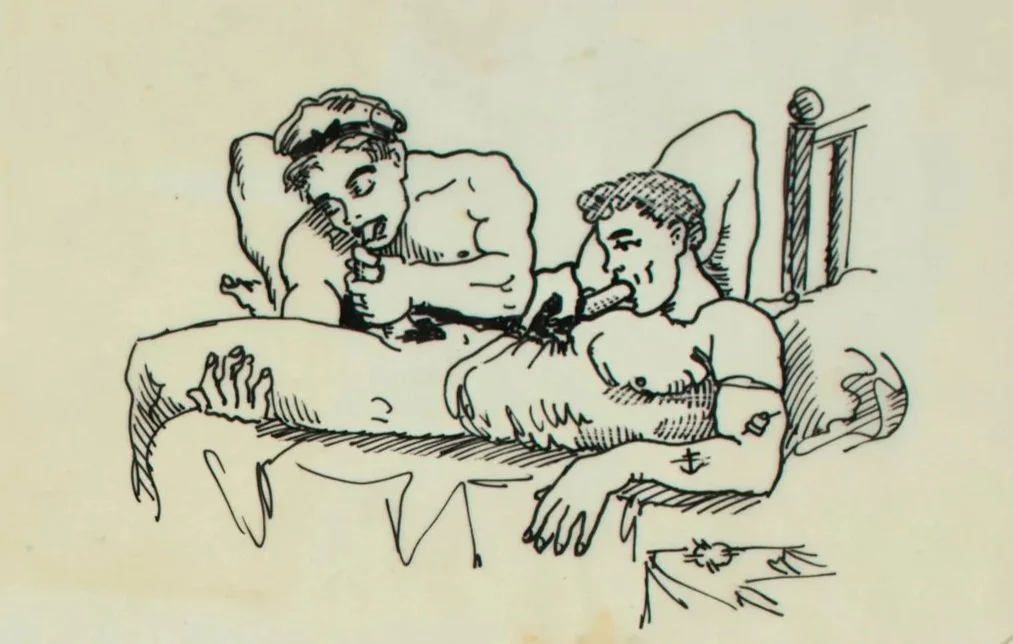
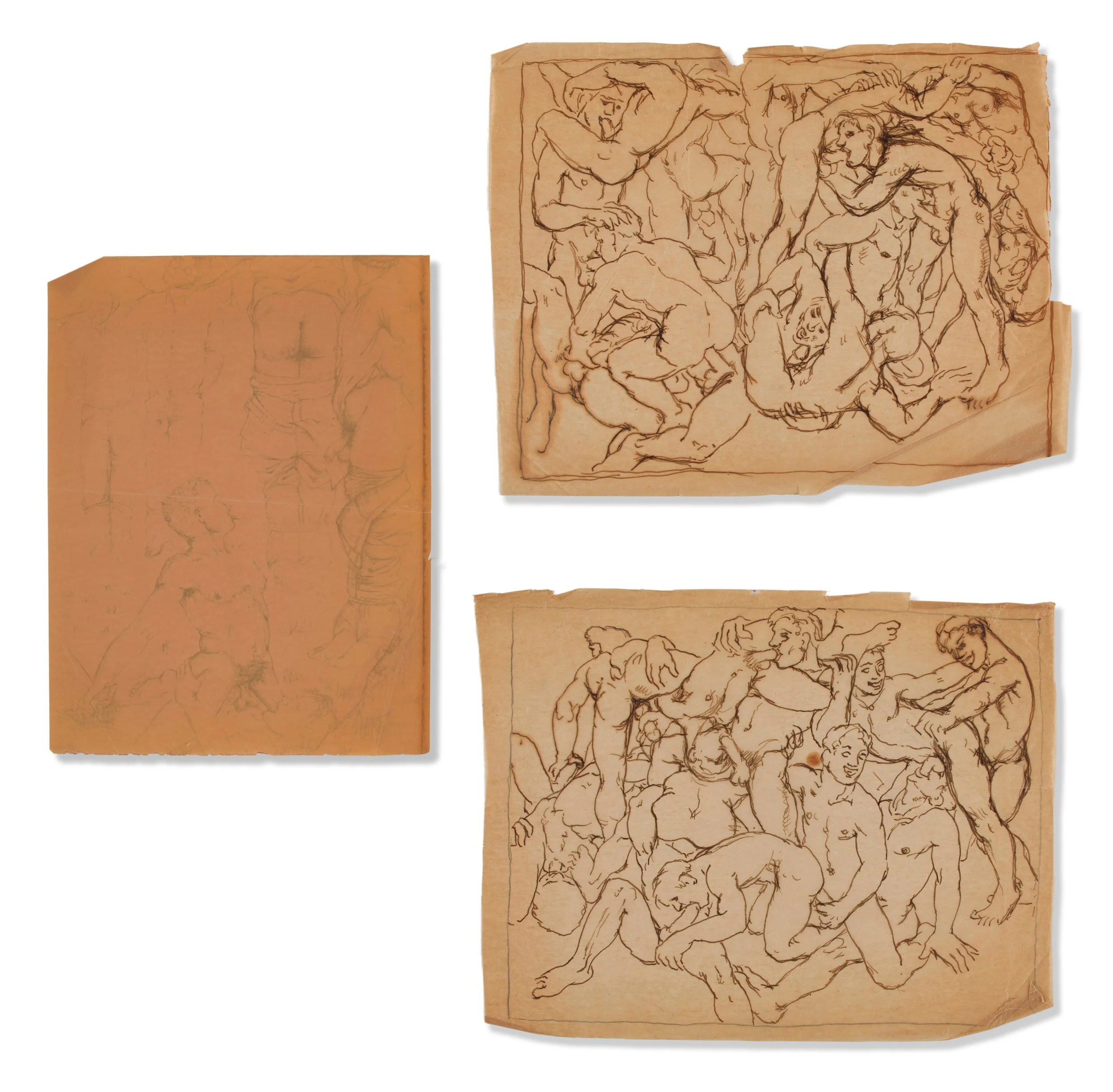
Samuel Steward. Untitled (Orgy Scene). Offered in AFTER DARK on 23 April 2026.
Steward’s visual art is often overshadowed by his reputation as a sexual renegade and chronicler of 20th-century gay life. Working primarily with homoerotic themes, he was a prolific illustrator who often signed his artwork as Philip (von Chicago) in homage to his pen name as a novelist. Through a commercial arrangement with Thor Enterprises, his homoerotic drawings were marketed to a national audience through advertisements in Physique Pictorial.
After taking classes at the Art Institute of Chicago under the direction of Polish-American artist Salcia Bahnc, Steward developed what his biographer Justin Spring described as “a natural flair for line illustration” indebted to the example of Jean Cocteau. Spring further elaborates:
“He simultaneously took up painting, clay modelling, and various other media, in each case working almost exclusively with the male nude as his subject. Over the next five years he would create murals, oil paintings, watercolors, scratchboard illustrations, incised metalwork, glass etchings, small clay sculptures, painted screens, and painted lampshades, all of them featuring homoerotic themes… He also experimented with “small tempera portrait drawings with semen as a binder instead of egg white, the fluid being furnished by the subject of the drawings,” thereby creating macabre souvenirs of specific dalliances with men he found particularly attractive.” [4]
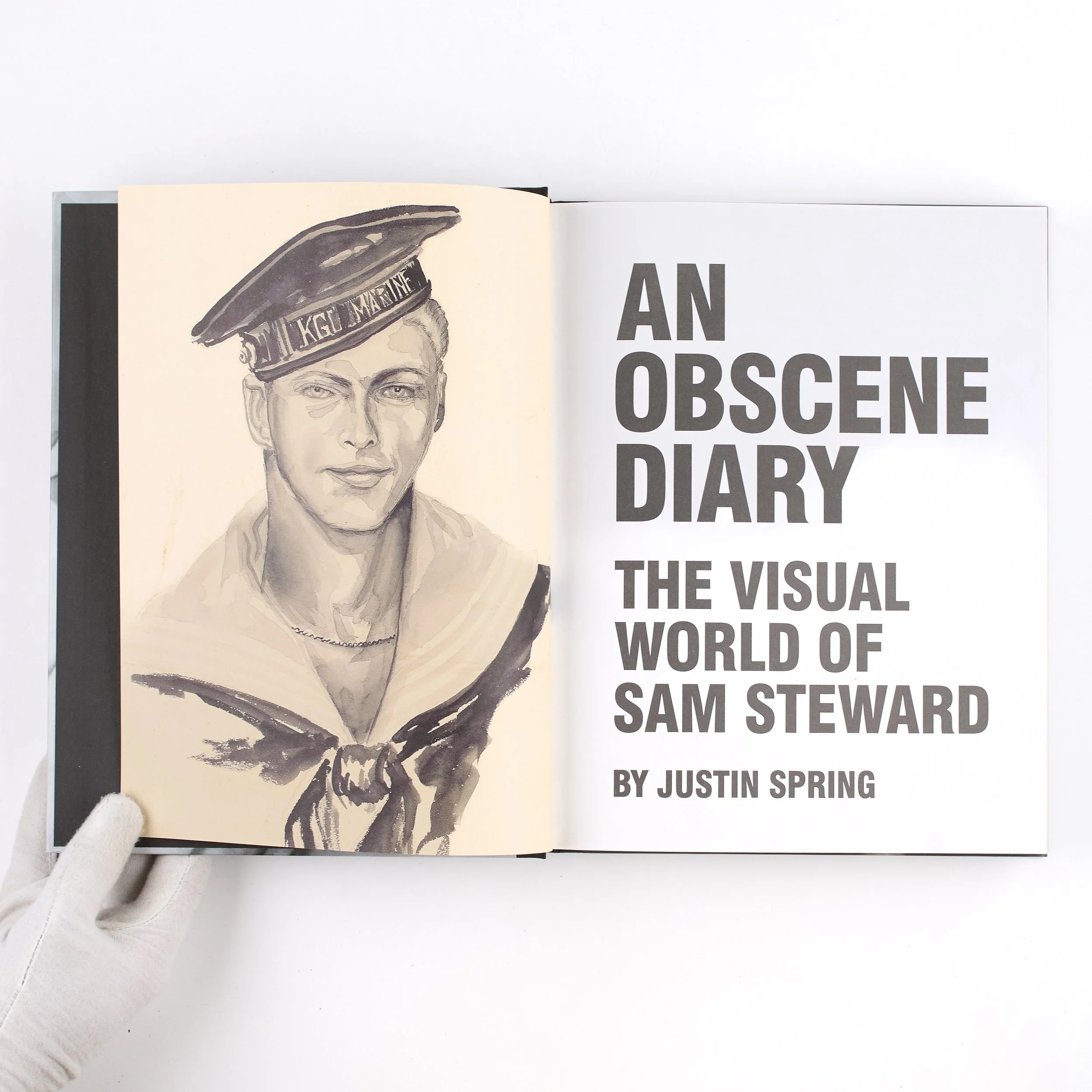
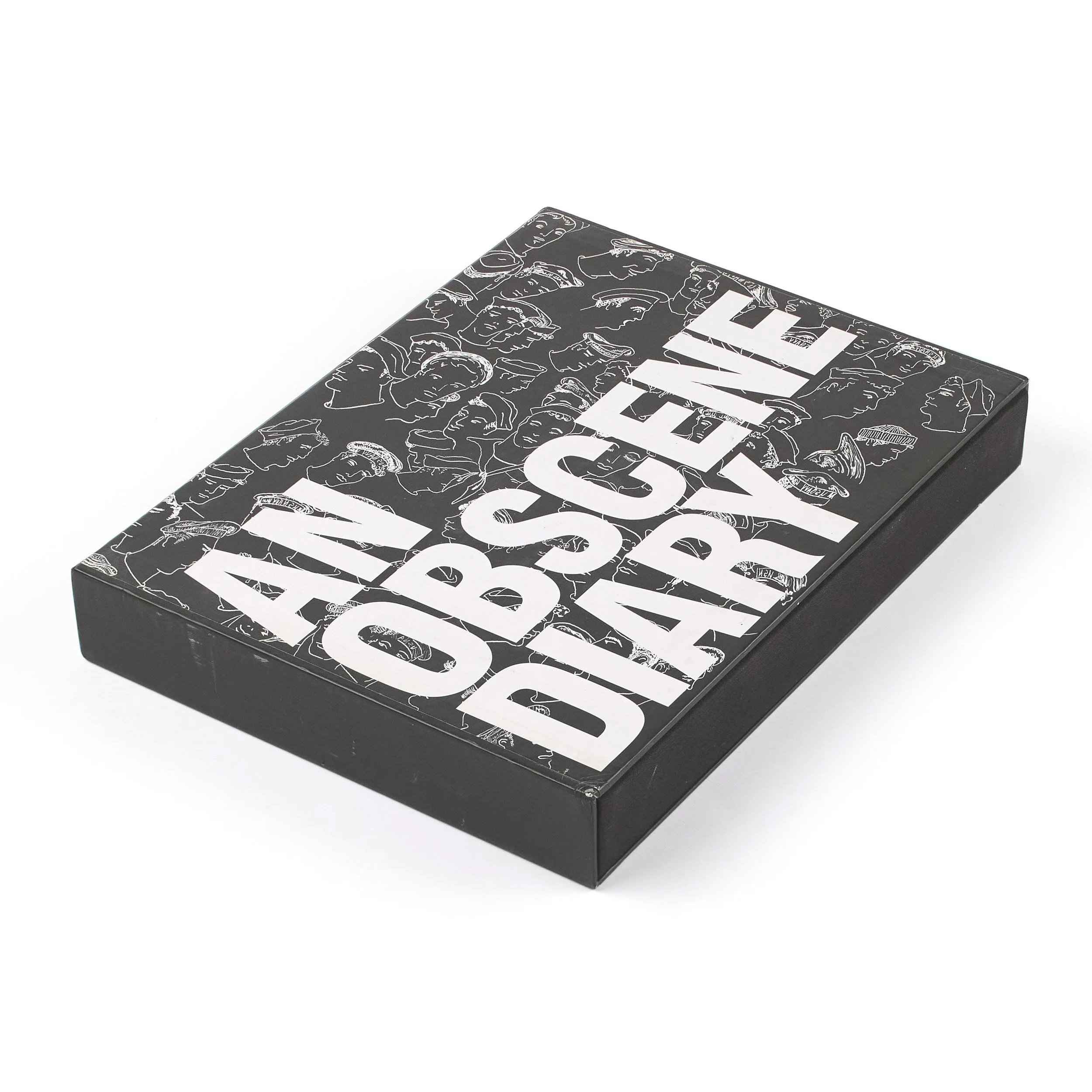
Justin Spring’s "An Obscene Diary: The Visual World of Sam Steward", 2010. Elysium Press/Antinous Press. Offered in AFTER DARK on 22 May 2025.
As a skid row tattooist and gay man in Chicago, his chosen subjects reflect his taste for illustrating soldiers, sailors, leatherfolk, rough trade, and other embodiments of rugged masculinity. Published in 2010 in a limited edition of 1,000 copies, An Obscene Diary: The Visual World of Sam Steward collects a substantial body of Steward’s homoerotic artwork contributing to a broader reassessment of his significance as a visual artist.
Notes
[1] Wardell B. Pomeroy, “Foreword,” in Sam M. Steward, Bad Boys and Tough Tattoos: A Social History of the Tattoo with Gangs, Sailors and Street-Corner Punks, 1950-1965 (New York: Harrington Park Press, 1990), p. 1.
[2] Stephen K. Stein, Sadomasochism and the BDSM Community in the United States (New York and London: Routledge, 2021), p. 19.
[3] Samuel M. Steward, “Dr Kinsey Takes a Peek at S/M: A Reminiscence” in Mark Thompson, ed., Leatherfolk: Radical Sex, People, Politics, and Practice (Boston: Alyson Publications, 1991), p. 89.
[4] Justin Spring, Secret Historian: The Life and Times of Samuel Steward, Professor, Tattoo Artist, and Sexual Renegade (New York: Farrar, Straus and Giroux, 2010), p. 101.
Contributors
Barry Oliver
Cataloger, LGBTQ+ Art & Material Culture
NOTABLE LOTS
Click the lot image for more information