
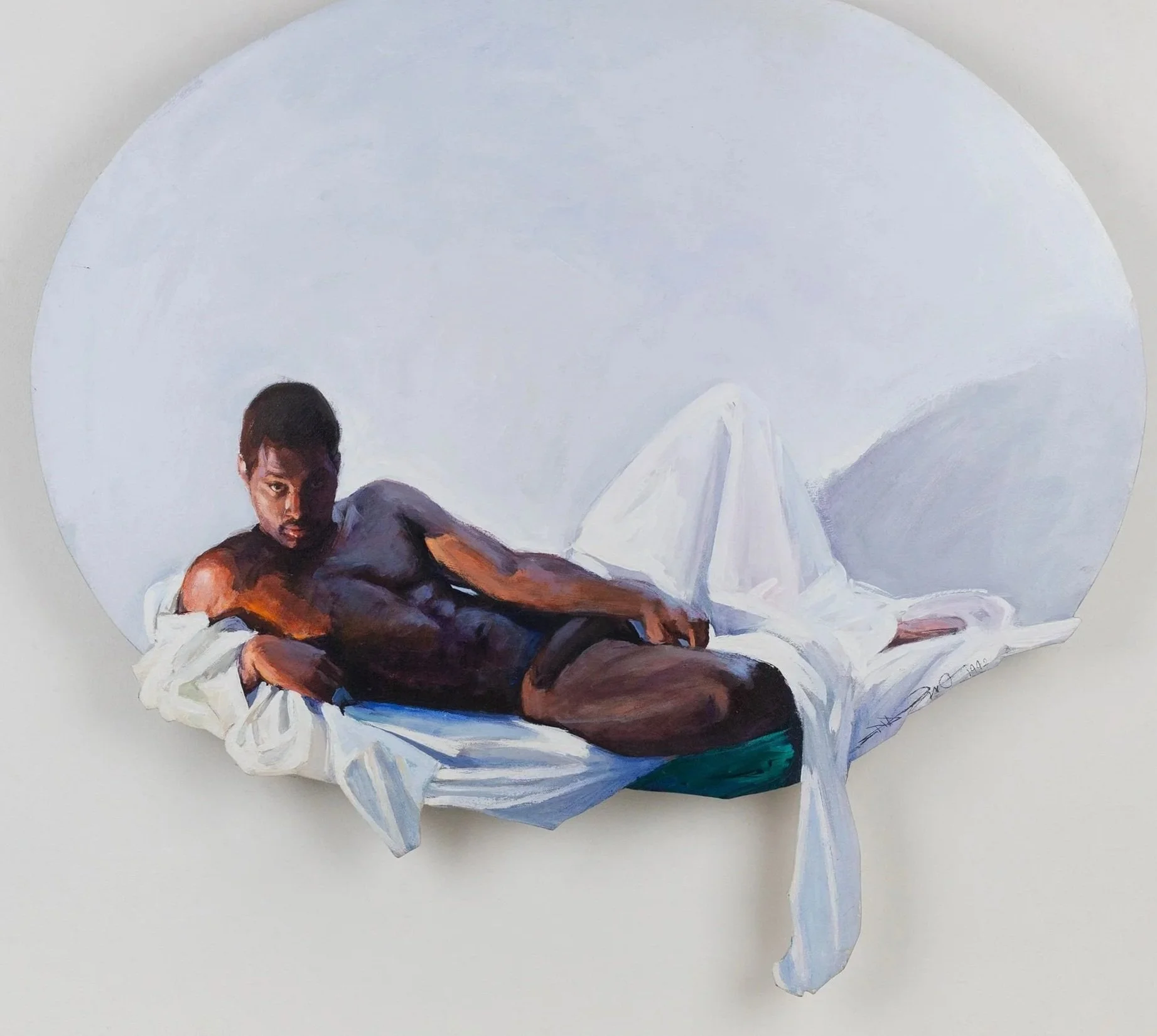
SHOZO NAGANO
JAPANESE, 1928-2008
Shozo Nagano. 1992. Oil on shaped wood panel. Offered in AFTER DARK on 25 July 2024.
NOTE: The following article is NSFW and includes images of sex and artistic nudity.
Shozo Nagano (1928-2008) was born in Kanazawa, Japan, along the western coast of Honshu. Nagano began his art education shortly after the end of the American occupation of Japan. In 1952, he attended the Kanazawa College of Art studying under the western-style (洋画 Yōga) master Kazuya Takamitsu alongside many other famous Japanese modernists such as Norio Azuma.[1] In that same year, he made his exhibiting debut at the annual Shinseisaku Kyoukai Exhibition, where he would continue to exhibit every year until 1959.[2]
Together with the artists Ushio Nakazawa, Fuji Tanaka, and Tatsuo Doi, as well as their advisor Yusuke Nakahara, Nagano would exhibit as part of the Timism or “Time School” group at the 1962 Yomiuri Independent Exhibition at the Tokyo Metropolitan Museum of Art. This exhibition would prove highly controversial, as Ushio Nakazawa’s interactive work, an intentionally bursting bag of red ink, was pulled from the show. Nagano and the rest of the Timists would continue to create controversial interactive art as defined in the Time School Manifesto, their intention was to “…replace an absolute sense of time with relative time and to engage with different perspectives by viewing art through different dimensionalities.”[3]
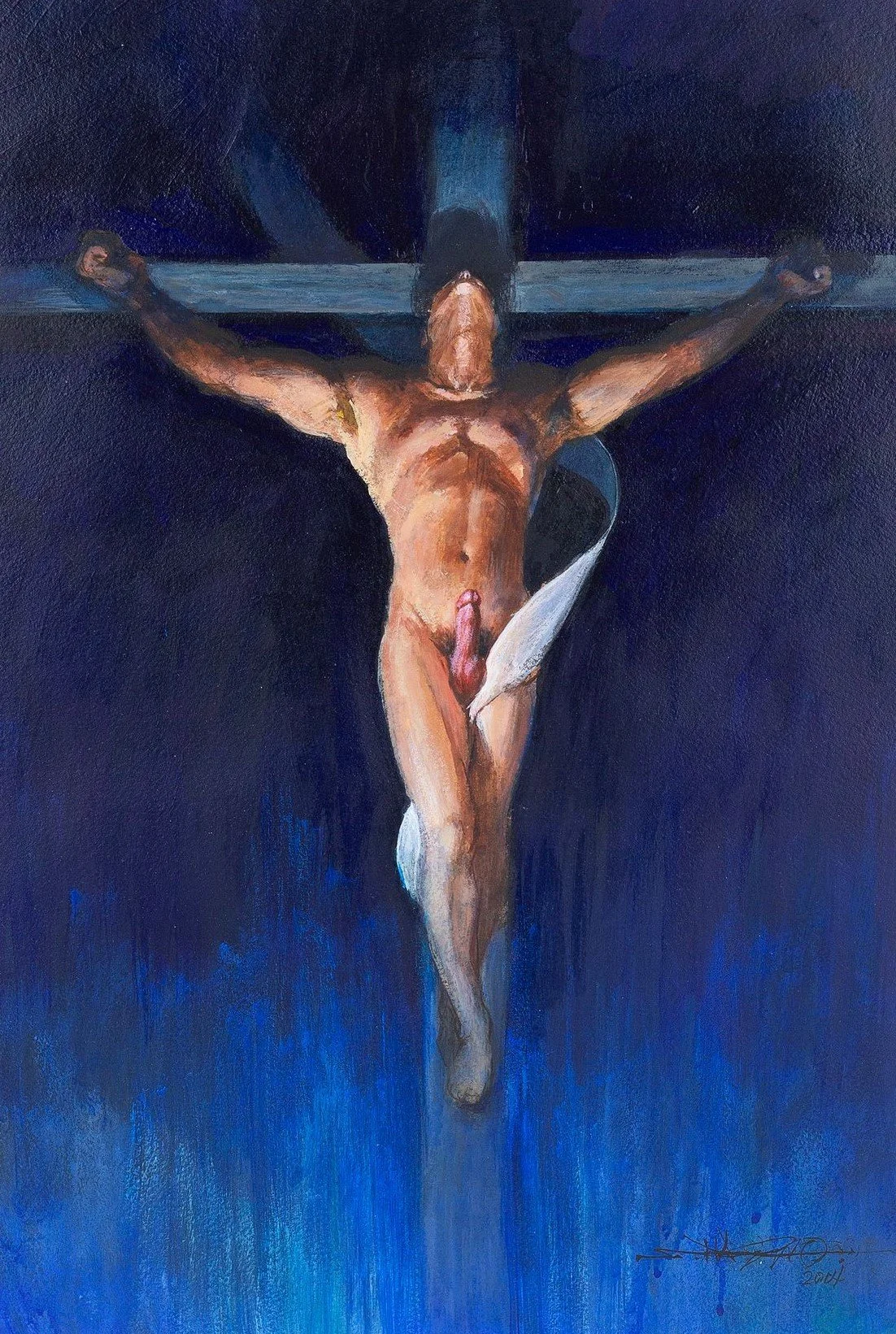
Shozo Nagano. “Untitled (Christ Rising).” 2004. Oil on paper. Offered in AFTER DARK on 31 October 2024.
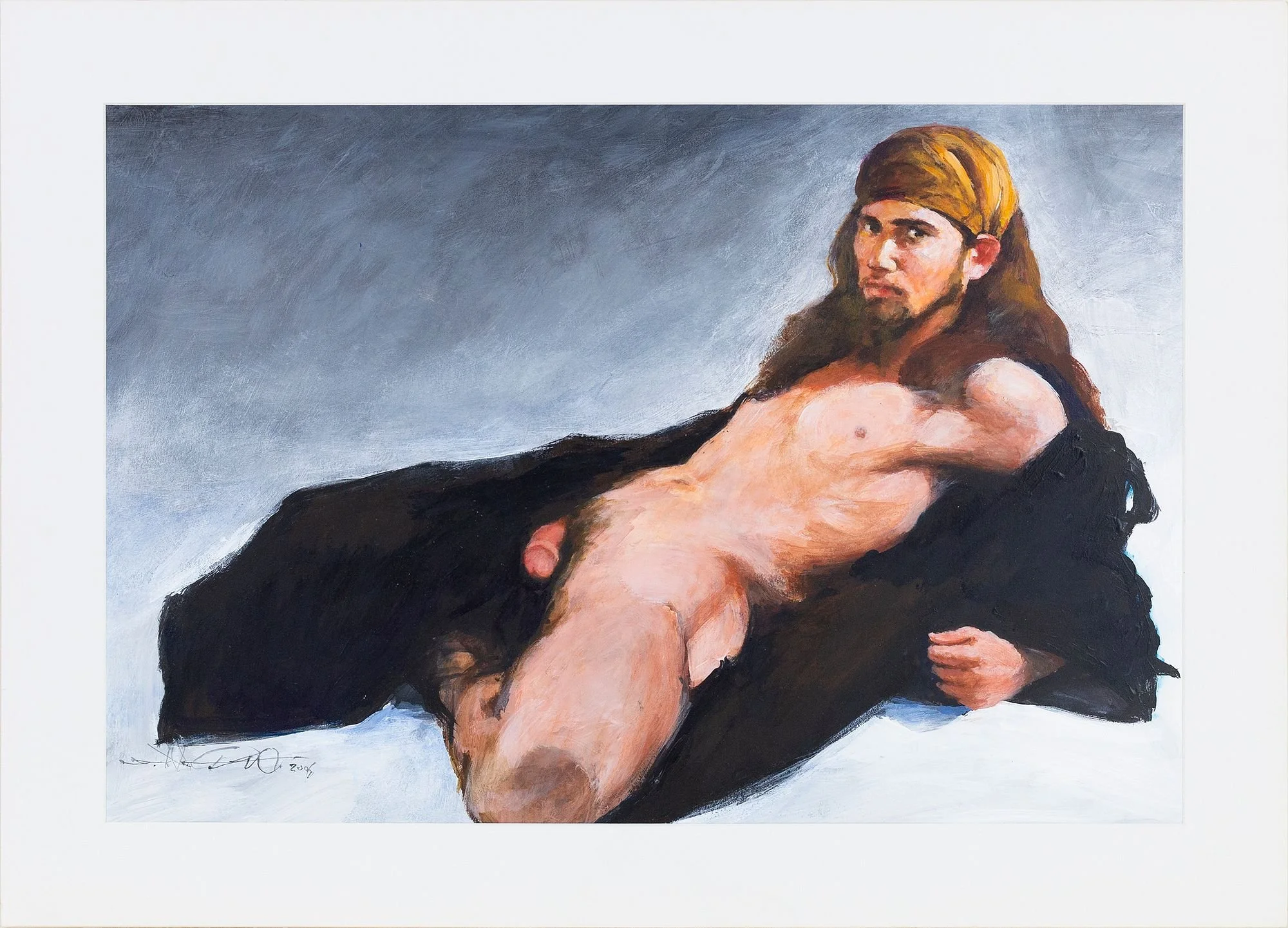
As Nagano continued to exhibit with the Timists in Japan, he also began to explore life outside of his home country, visiting Chile and other South American destinations throughout the early 1960s. In 1965, Nagano emigrated to New York City with little to his name, residing in an East Side tenement and studying at the Art Students League and the Pratt Institute. Nagano would often substitute the more expensive canvas of his paintings with bedsheets procured through department stores. Nagano initially continued to work in the mode of the Timists, producing abstract paintings with distorted canvas stretchers. However, in the late 1960s, Nagano became fascinated with the Christian New Testament creating a series of male nudes engaging with the body of Jesus Christ and other Christian iconography.[4]
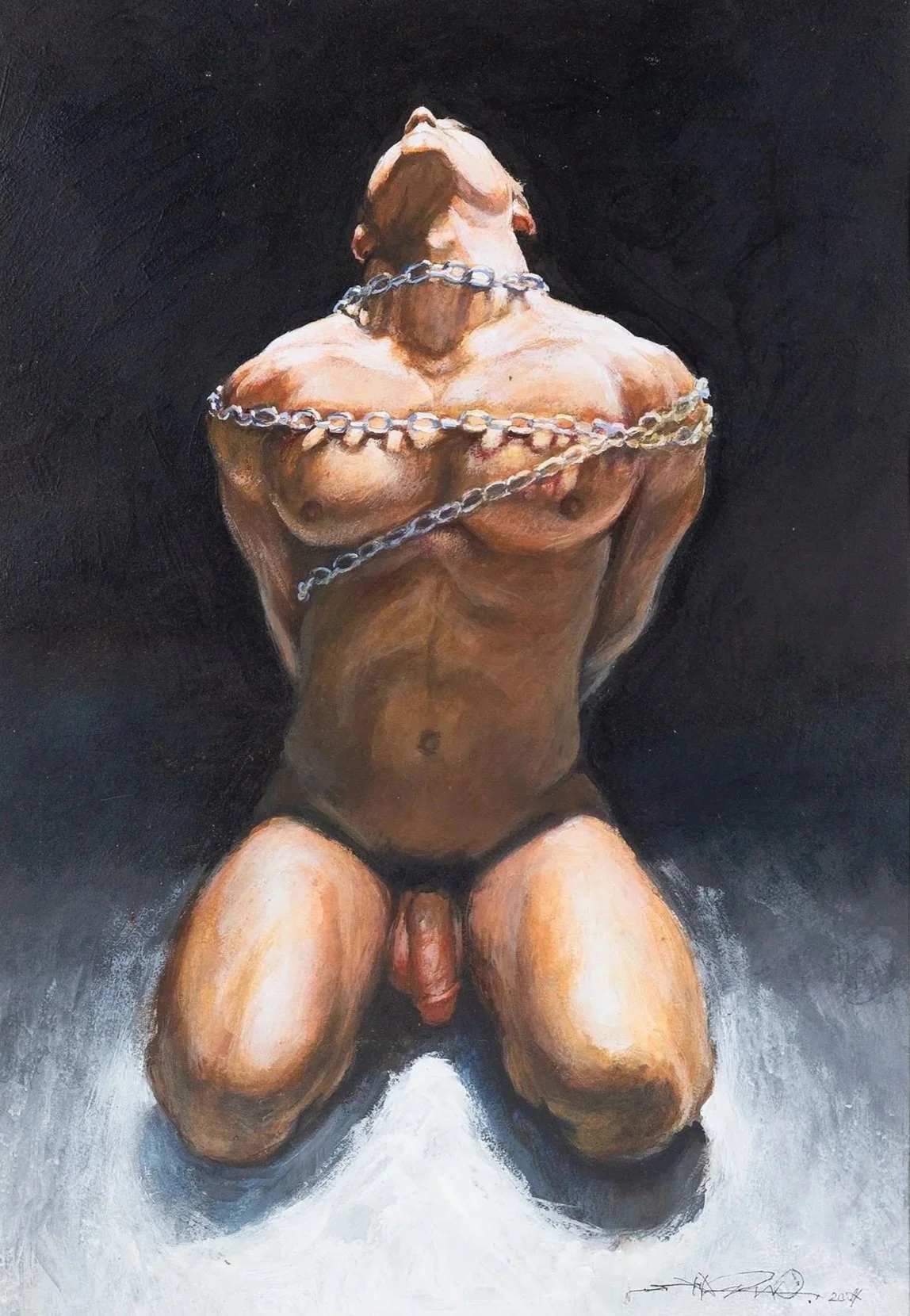
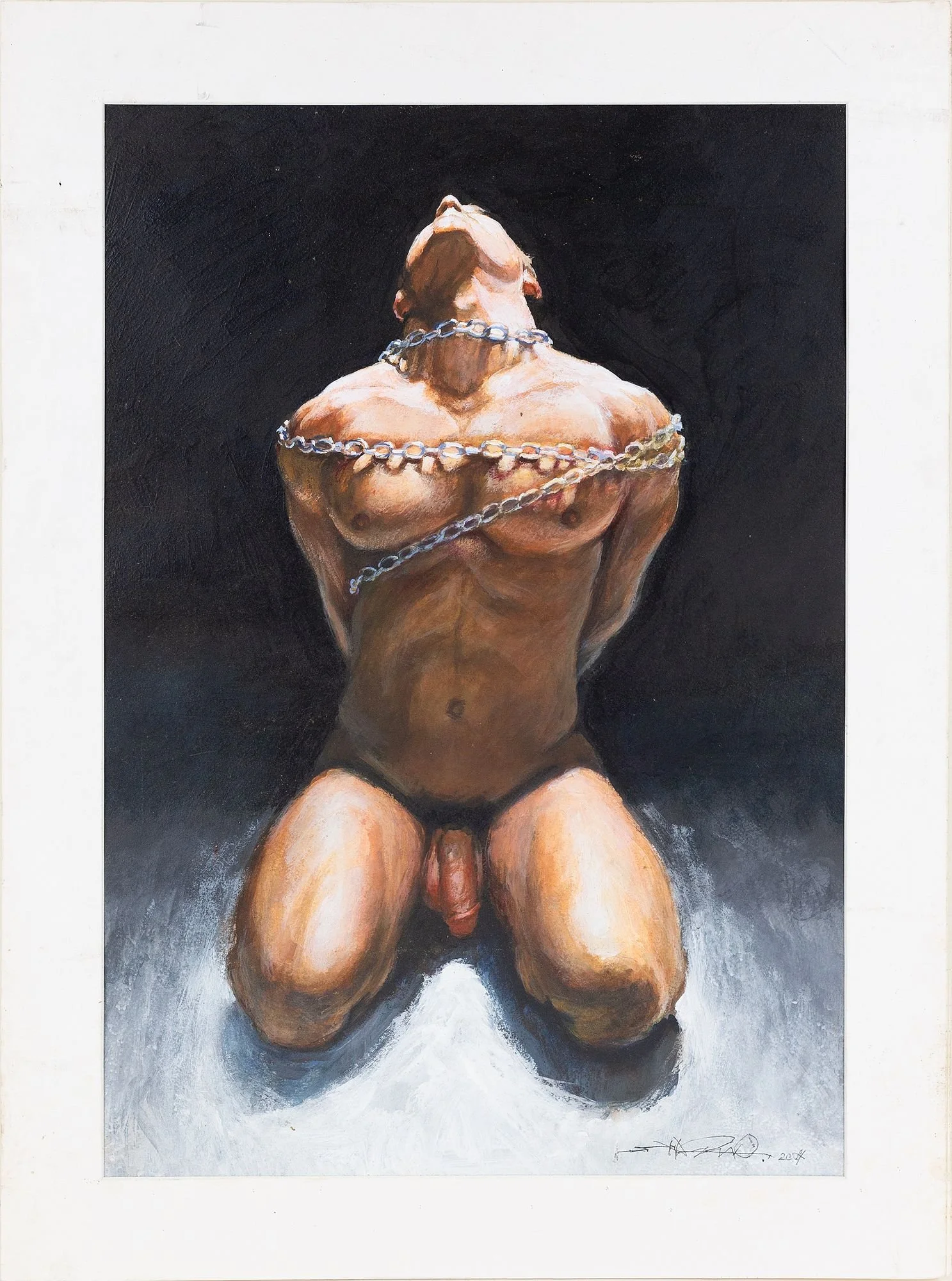
Shozo Nagano. “Untitled (Nude in Chains).” 2004. Oil on paper. Offered in AFTER DARK on 18 June 2026.
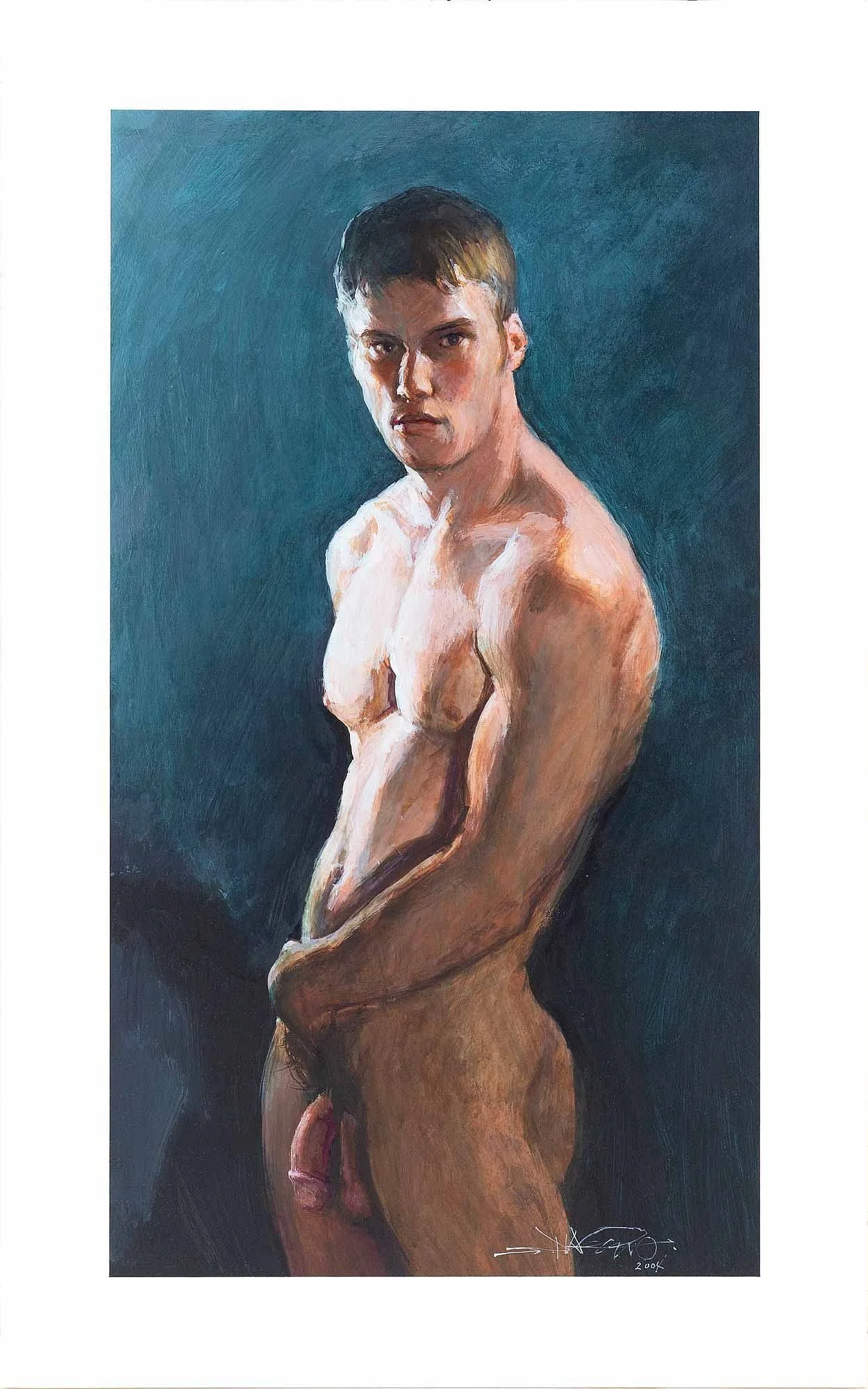
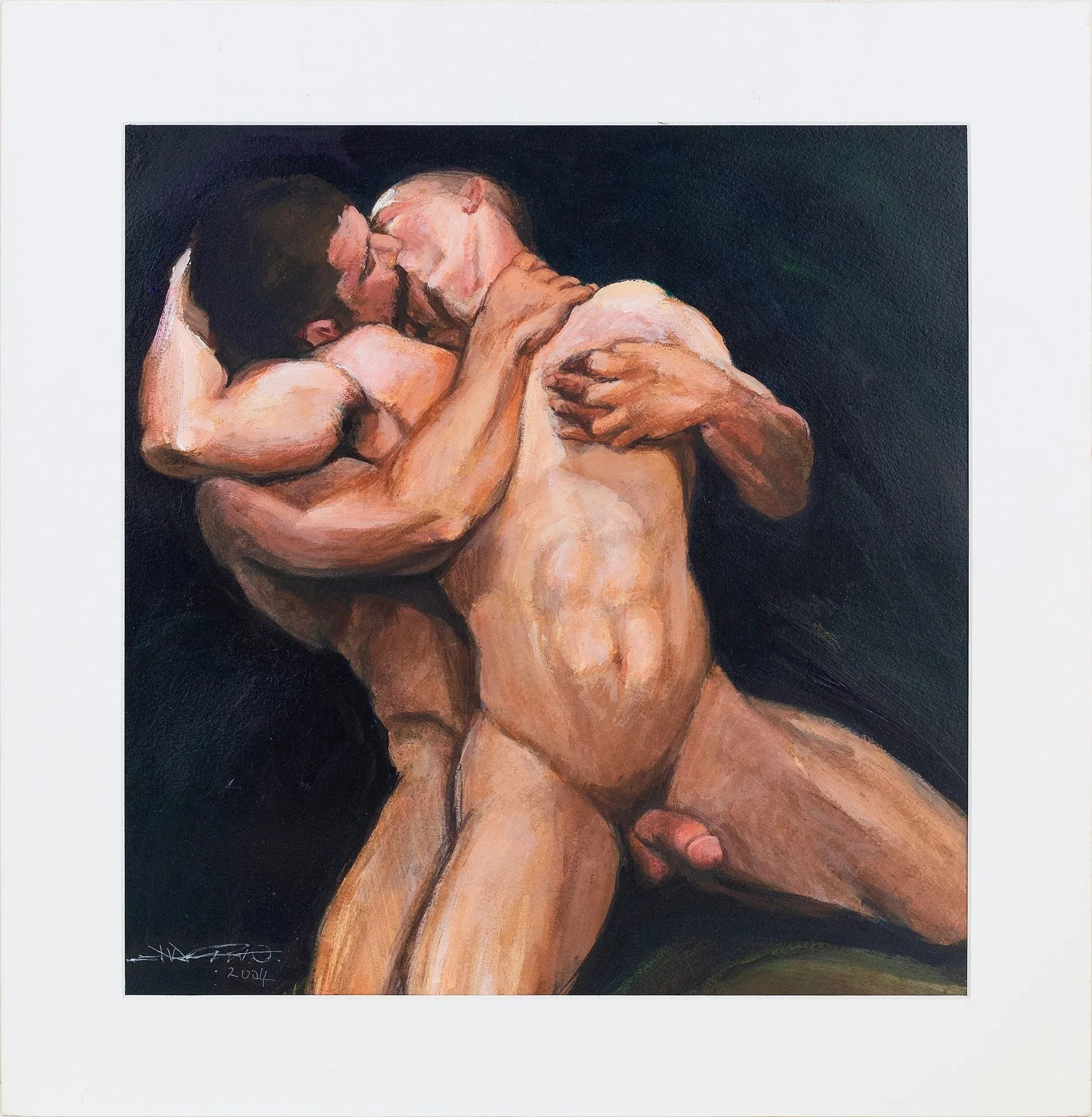
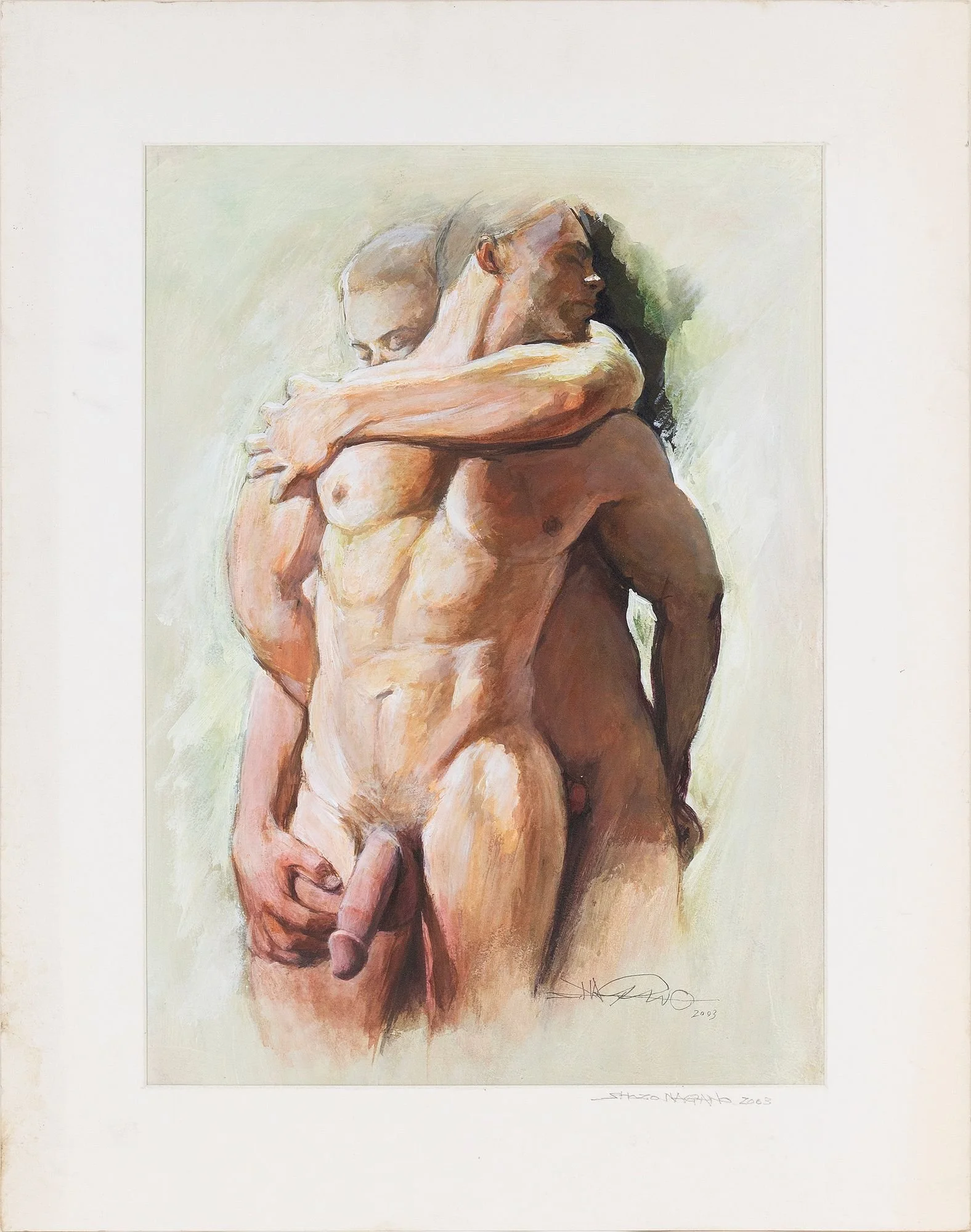
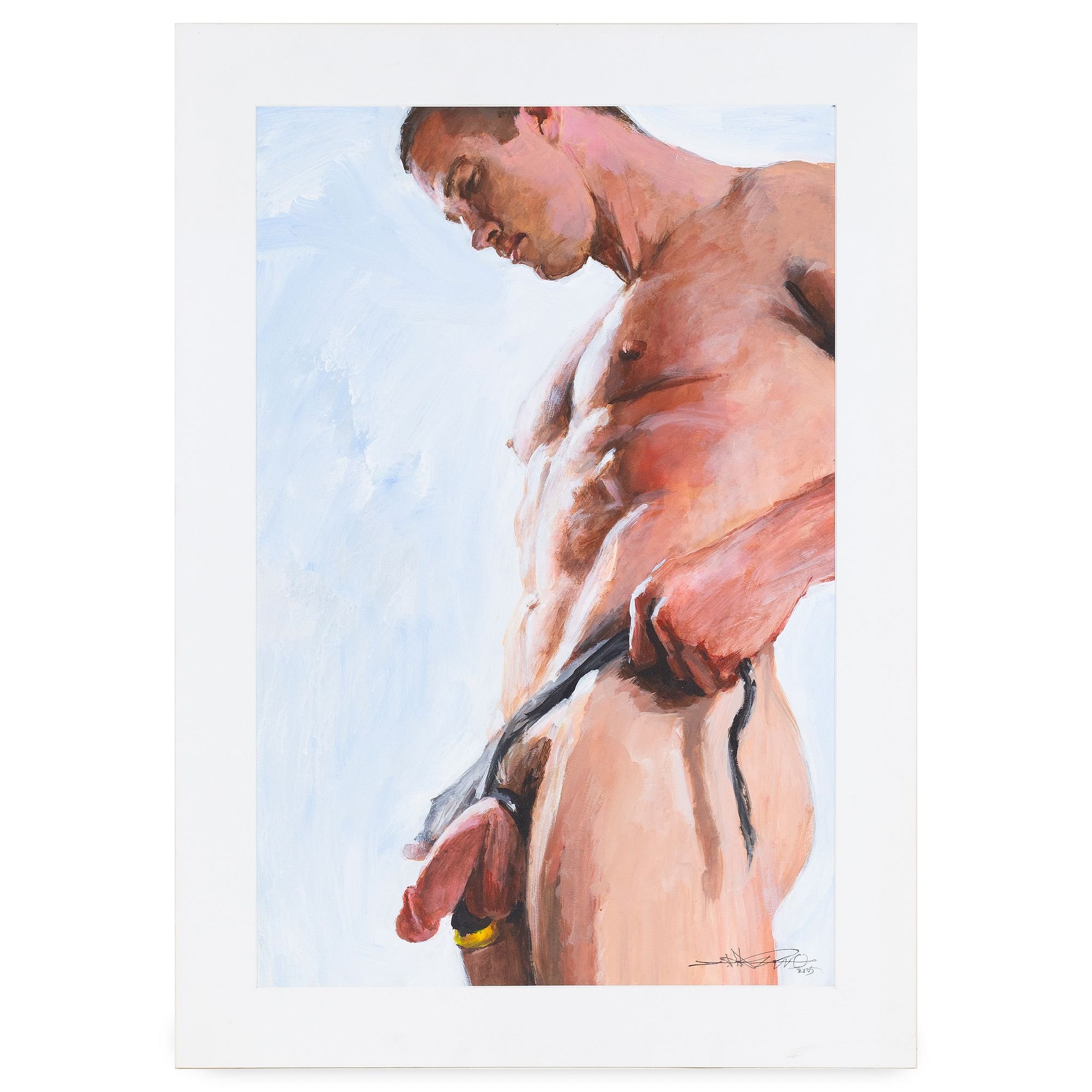
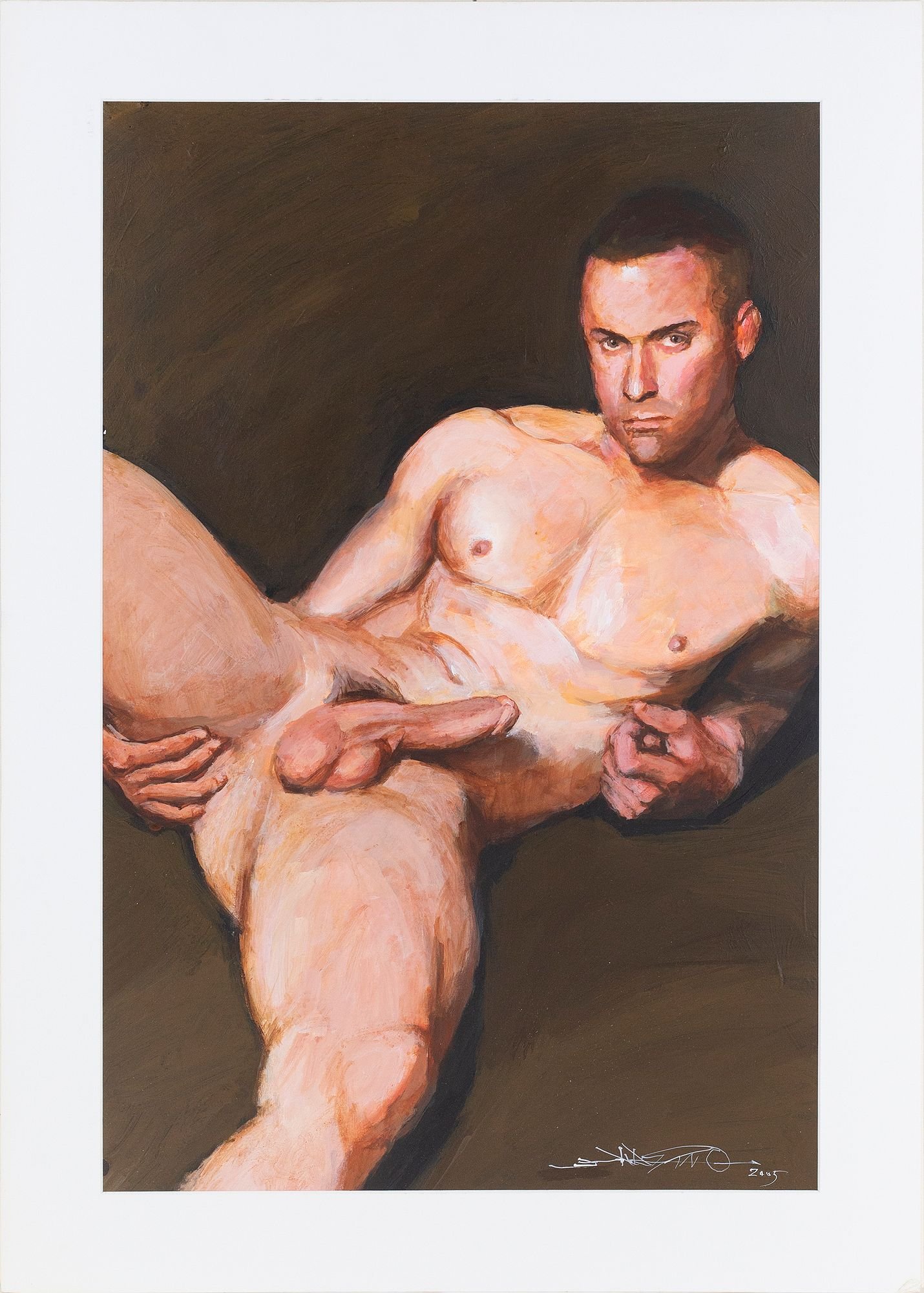
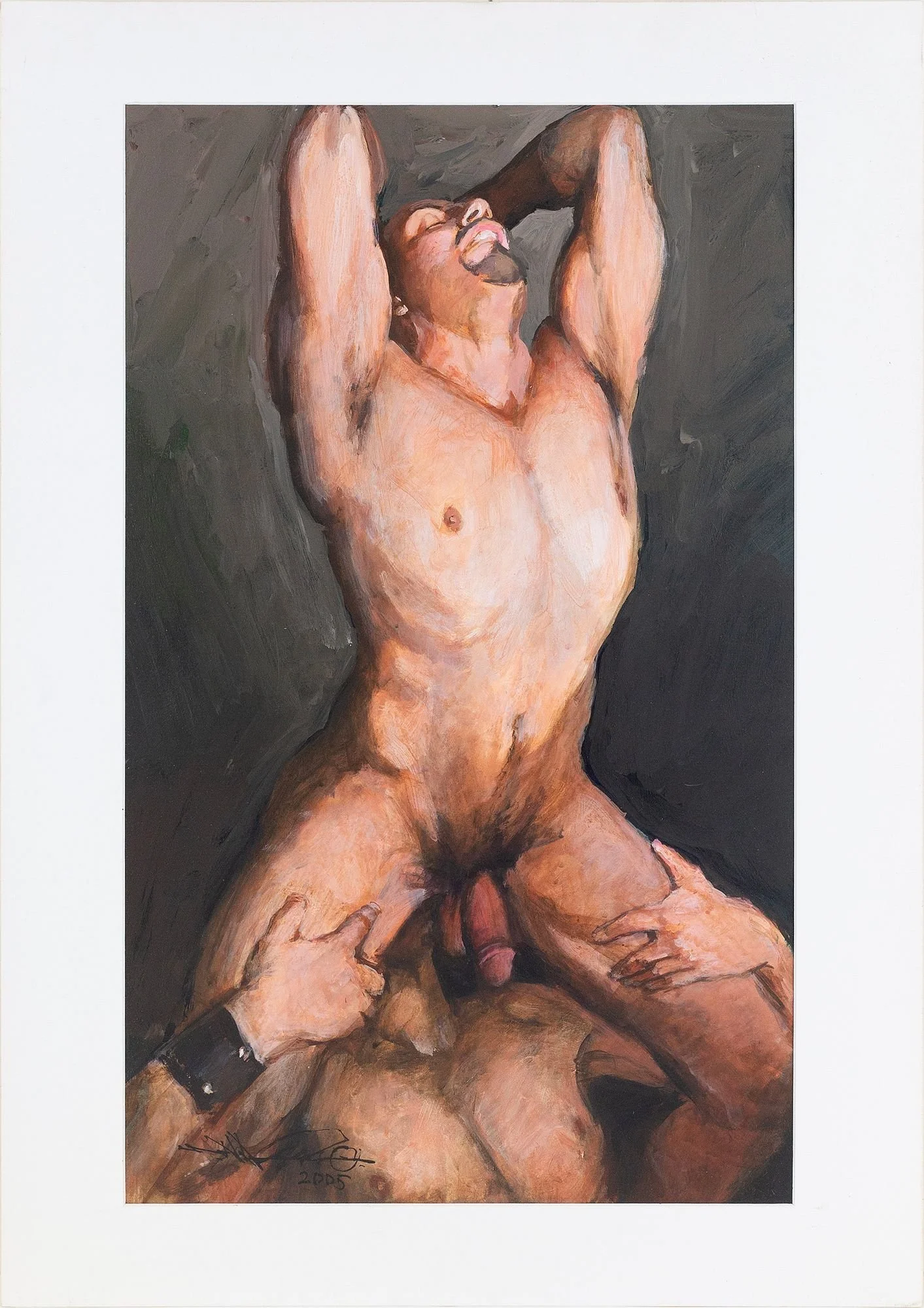
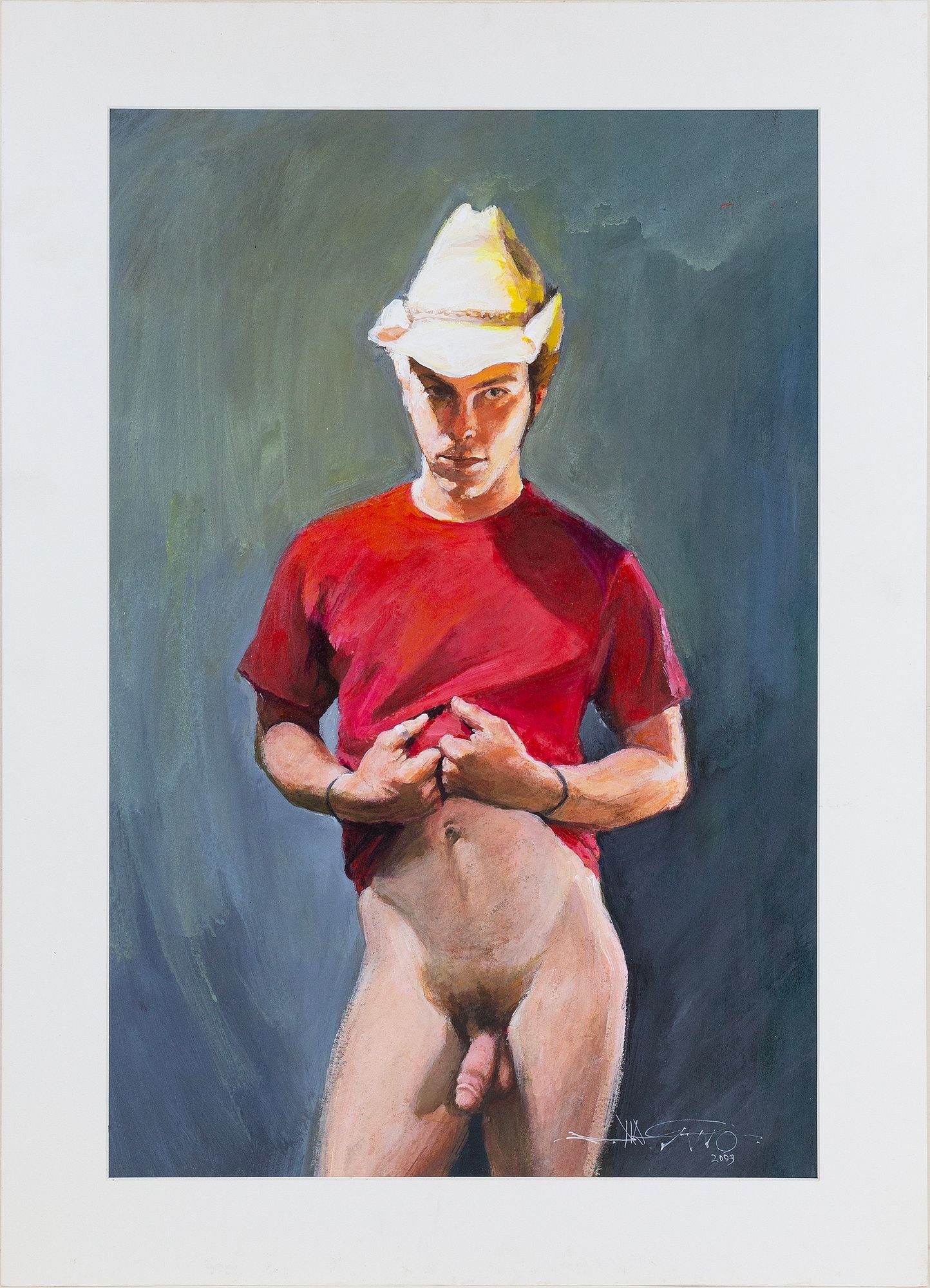
By 1975, Nagano was the president of the Japanese Artists Association of New York City, and had become a household name in the Japanese-American arts community. While he would still create sculptural canvases and abstract art, his oeuvre became increasingly centered around the male form. During the AIDS crisis of the 1980s, Nagano would once again focus on the male body in duress. While he would take some cues from his earlier exploration of the suffering of Christ, his new subjects were increasingly sexualized, often engaged in dichotomous scenes of ecstasy and pain. His new work often featured male bodies in the midst of heated embrace, often with bulging musculature, struggling against taught rope and tensioned cloth.[5]
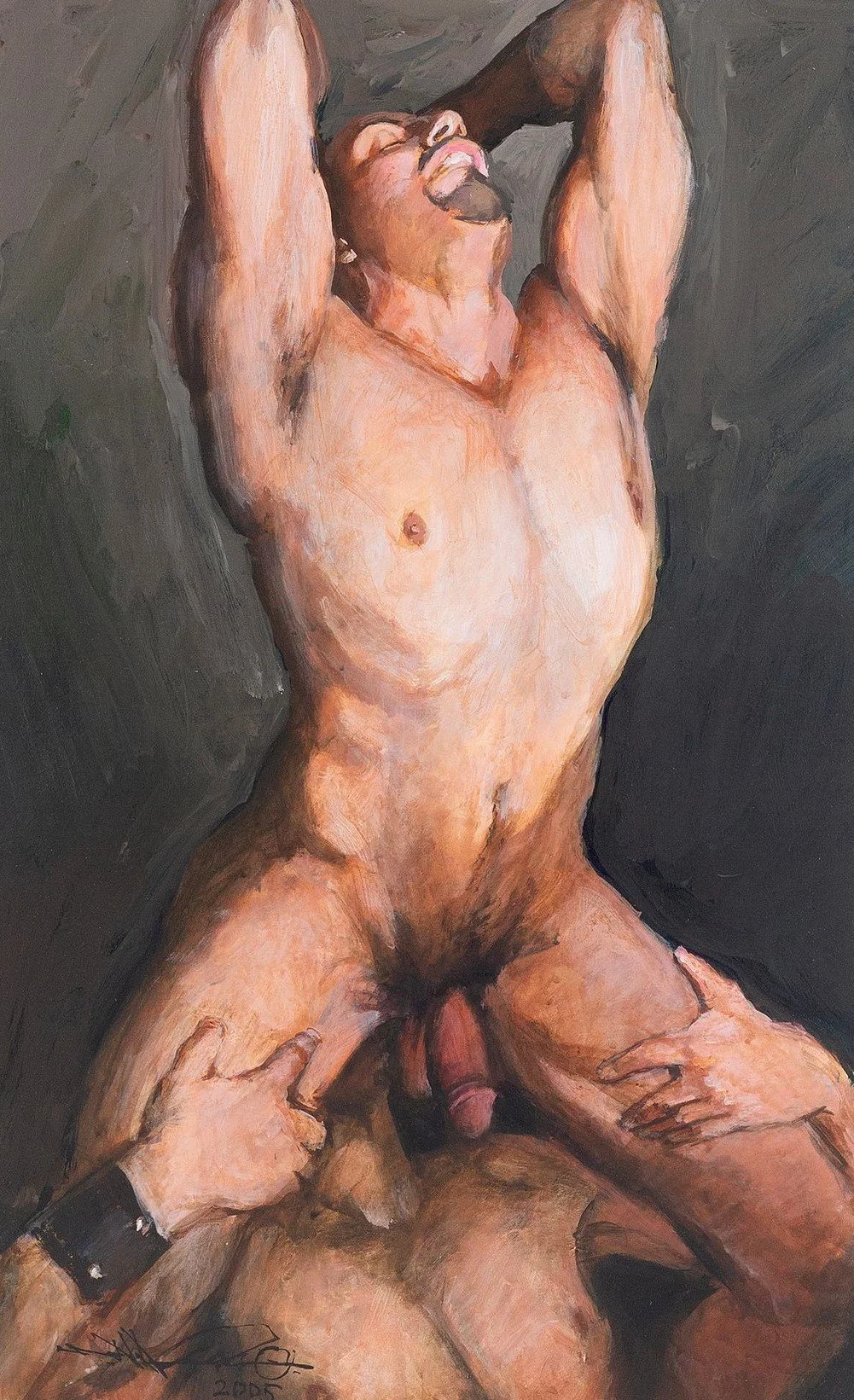
Shozo Nagano. “Untitled (Two Nudes in Ecstasy).' 2005. Oil on paper.” 2004. Oil on paper. Offered in AFTER DARK on 31 October 2024.
Later, in 1980, Nagano would visit Jim Thorpe, Pennsylvania for the first time. With the help and funding of his close friend, the writer and photographer Edward Moran, Nagano would decide to move from New York City to the quiet Pocono Mountain town. Nagano was well-regarded within the community, and all who know him remarked on both his humble nature, and his incessant drive for art. He could be seen painting in his studio day and night, until eventually in his older years, his arthritis would render him unable to work. Nagano passed away in 2008, at the age of 79.[6]
His legacy lives on through all those who knew him, and through the many prestigious galleries and museums which have exhibited his work including the Alonzo Gallery, the Berkshire Museum, the New Orleans Museum of Art, SUNY at Albany, the Anita Shapolsky Gallery, and many more. His work remains in the permanent collections at the Berkshire Museum, the Blanton Museum of Art, SUNY at Albany, and in his home country in the Ishikawa Prefectural Museum of Art.[7][8]
Notes
[1] 石川県立美術館だより [Ishikawa Prefectural Museum of Art Newsletter.] Issue No. 323, September 1, 2010. p. 4.
[2] 長野祥三 | 作家解説|所蔵品のご案内| [Shozo Nagano | Artist Profile | Collection Guide.] Ishikawa Prefectural Museum of Art. https://www.ishibi.pref.ishikawa.jp/collection/index.php?app=meibo&mode=detail&data_id=9971
[3] Miyagawa, Akiko. “Art Words | Reference | 時間派 [Art Words | Reference | Timism.]” Artscape. Accessed April 22, 2026. https://artscape.jp/artscape/reference/artwords/k_t/timism.html.
[4] “Shozo Nagano, Artist Profile.” Anita Shapolsky Gallery. Accessed April 22, 2026. https://anitashapolskygallery.com/newsite/nagano-shozo/.
[5] Wright, Yvonne. “Artist Spotlight: Shozo Nagano.” The Current, December 11, 2018. https://jimthorpecurrent.com/arts-music/artist-spotlight-shozo-nagano/.
[6] “Artist Lent His Quiet Vigor to Jim Thorpe ** Shozo Nagano Was a Muse and Mentor to the Community. He Died Dec. 1 at Age 79.” The Morning Call, October 5, 2021. https://www.mcall.com/2007/12/21/artist-lent-his-quiet-vigor-to-jim-thorpe-shozo-nagano-was-a-muse-and-mentor-to-the-community-he-died-dec-1-at-age-79/.
[7] “Shozo Nagano, Artist Profile.” Anita Shapolsky Gallery.
[8] Digital Catalogue Entry, TORSO (トルソ) 長野祥三 [TORSO, Shozo Nagano]. Ishikawa Prefectural Museum of Art. https://artplatform.go.jp/ja/collections/W285082.
Contributors
Alex Burgamy
AFTER DARK Specialist, LGBTQ+ Fine Art
NOTABLE LOTS
Click the lot image for more information